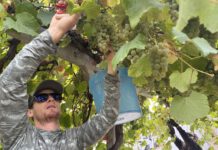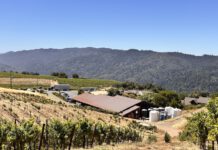


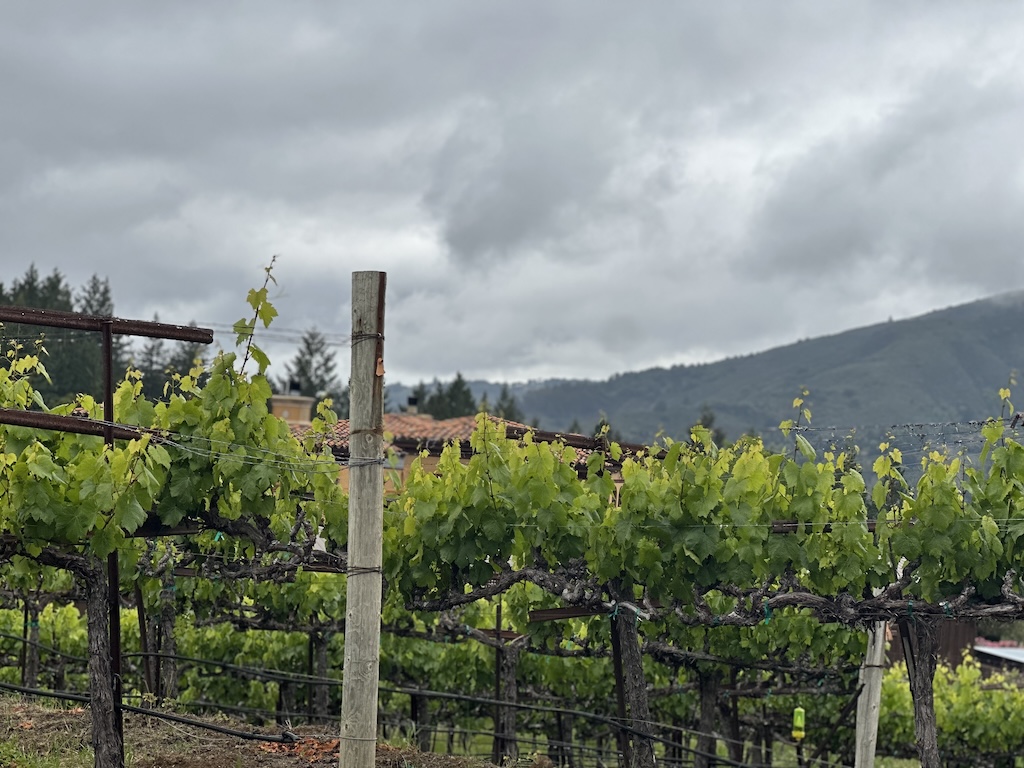
Winegrower Dave Moulton, of Burrell School Vineyards, was clearly concerned. He was experiencing the earliest bud break, flowering and fruit set in his chardonnay and pinot noir vines he’s seen in all his years of growing grapes.
“Our roses gave us a clue that mildew was setting in,” he says, thankful to his late wife, Anne, for planting all the roses she had over her lifetime on the mountain. She passed away in November of 2016. “The French are so smart, they plant roses at the end of each vine row. They are the canaries in the coal mine.” His vineyard and property manager, Chido Leon, sprayed stylet oil on the roses and then proceeded to do the same with the pinot noir and chardonnay vines. Rain was once again in the forecast, and they needed to stay ahead of it.
“I’m worried about the delicate fruit of the chard and the pinot, as they are thin-skinned,” says Moulton. “We are seeing bloom and fruit set in the cabernet, but I told Chido to take care of the Burgundian varietals first, and we’ll worry about the others later.”
Moulton is not alone in facing the challenges of whipsaw weather this season. January brought summer-like temps, followed by bouts of frigid precipitation in February, only to see summer heat in the triple digits return in March. April then flipped between May and February weather.
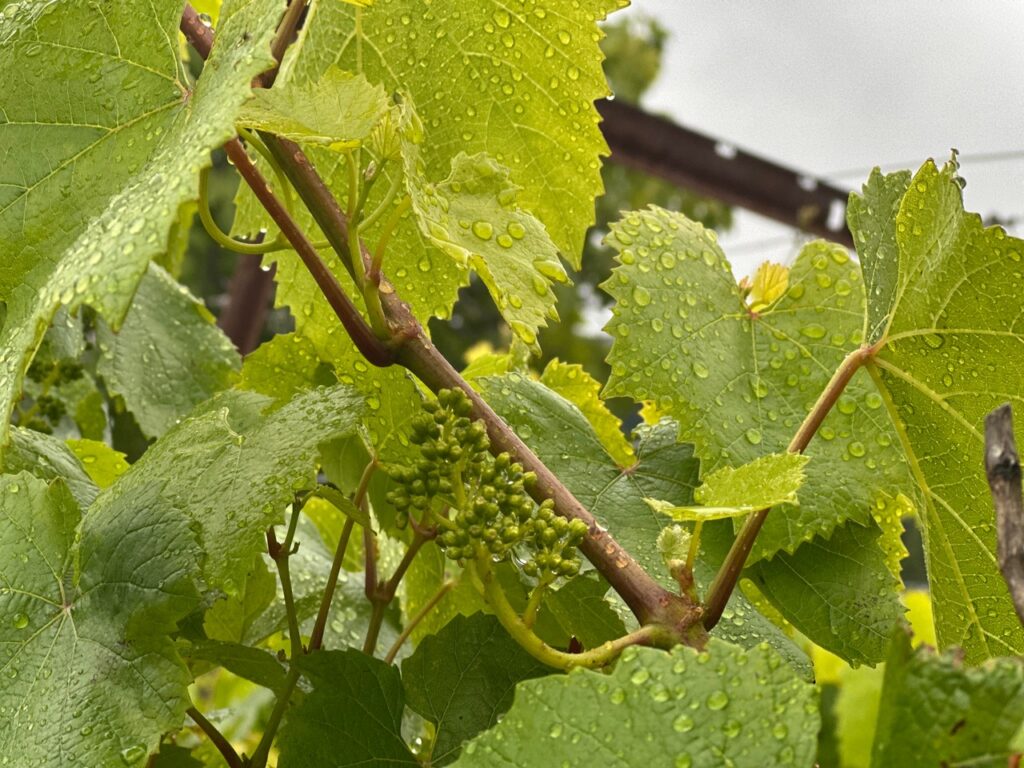
Anybody with vines in the Santa Cruz Mountains has had to adjust to the increased mildew pressure, which requires more frequent sprays to abate the buildup of spores that can cause bunch rot. It should be noted that this year’s cherry crop in the Santa Clara Valley is non-existent, due to the warmth followed by rain during bloom, which ruins fruit set.
(Read Part 2 of our Spring 2026 vineyard industry series here.)
(Read Part 3 of our Spring 2026 vineyard industry series here.)
Similarly, strawberry farmers on the central coast are not thrilled about the seesaw patterns, and heavy late-season rain is a serious berry killer.
Viticulture consultant Joaquin Casanueva, with Alesia Viticulture, works with a lot of smaller vineyards throughout the Santa Cruz Mountains wine region. “We are adjusting our spray levels for more frequency,” Casanueva explained. “We’ve gone from every 14 days to 10 days in some vineyards, and to every seven days in others. So far, we have stayed ahead of mildew outbreak.” We spoke with him before the rains of April 20 and 21.
He reported that the Rhys vineyards on Skyline Boulevard, including Alpine and Horseshoe, all looked good. “Everything is advanced, but there is minimal flowering there,” he reported of the heavily Pacific-influenced sites. “We are certainly concerned about the upcoming rains, and we’ll see what happens. But as vineyard people, it’s just another curveball from Mother Nature. We’re used to this kind of stuff.”
Another local viticulture consultant, Ken Swegles, with Rhizos Viticulture, was already sounding the alarm a few weeks back in March. “This season is crazy,” he said. “Vines were at the third wire before mid-March, we had vines blooming before the spring equinox, and fruit set in some chardonnay vines, including at Redwood Grade Vineyard (near Mount Madonna).”
Last week, Prudy Foxx held a session at Regale Vineyards for any of the local grapegrowers who wanted to attend. They discussed a wide range of topics, including the most immediate pestilence at hand, which turns out to be Phomopsis viticola, a fungal disease that results in leaf spots and, eventually, fruit bunch rot.
Foxx says the way to control this is before it happens, by applying lime sulfur during the dormant period in winter. But this is best as a preventive treatment. Once phomopsis takes hold, it is very difficult to eradicate.
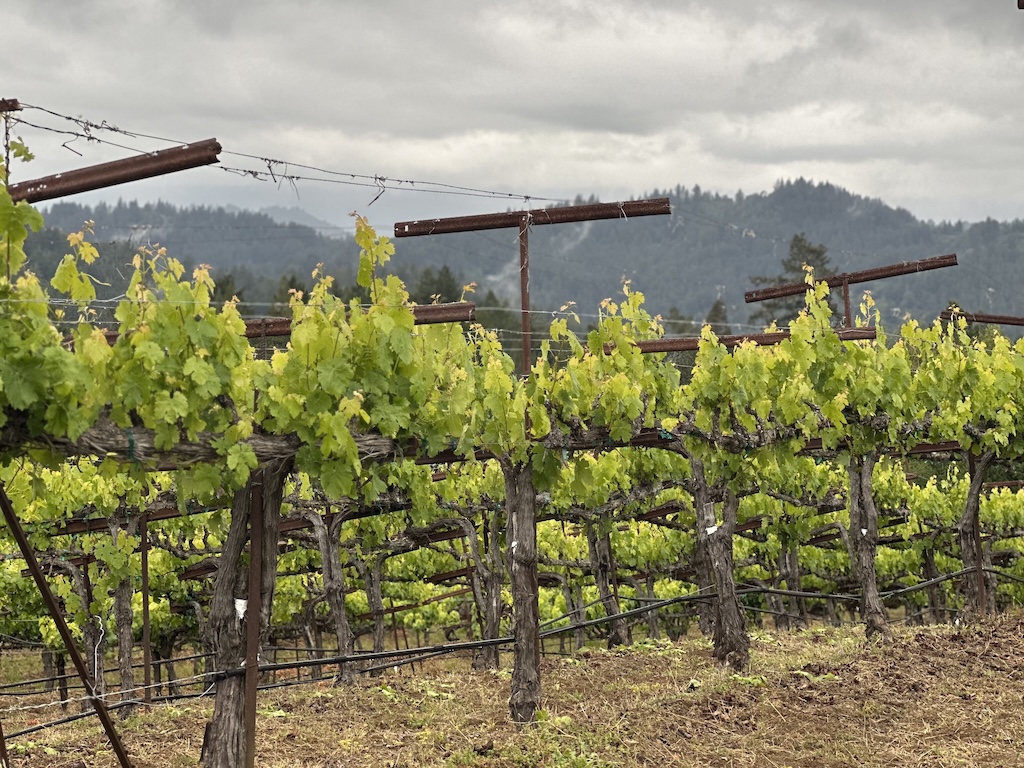
Another technique critical to creating the right framework for proper fruit development in cool wet spring conditions involves canopy management.
“What we are doing is shoot-thinning, or encouraging more shoot-thinning,” Foxx shared. This can reduce the crop, but can also lead to more light and air within the canopy. “Reducing disease pressure allows for more organic-type sprays and can improve wine quality because flavors are developed through sunlight and airflow.”
About 60% of the vineyards in the AVA are farmed without herbicides. It’s something that buyers increasingly demand, according to Foxx.
The big elephant in the room, though, is overproduction, and it’s a global problem brought about by changing consumption habits and preferences—as well as by overplanting.
“France and New Zealand are aggressively tearing out vines,” noted Foxx. So is California.
This was obvious on a recent drive through the central valley, where a huge vineyard tract had become a baby almond orchard.
Not everyone wants to rip out vines. And for these growers, reducing farming costs in this down cycle—as people buy and drink less wine—is critical.
Wineries with their own vineyards (who tend not to purchase a lot of outside fruit) are in the best position, says Foxx. “They can adjust for the amount of fruit they want to bring to maturity by pruning more aggressively, and dropping clusters early on.”
Vineyard owners who primarily sell their fruit to others are in a more difficult position, however. “They’ve put their heart and soul into these vines,” said Foxx. “It’s a passion thing for many of these small guys. They hate to see their fruit unsold.”
Foxx explained there are two strategies for vineyard owners who want to keep their vineyards alive during this downturn: mothballing and idling.
Idling is the less extreme approach. “Idling is minimal because you are not going to harvest this year, but could return to production next year,” explained Foxx. “It saves 40 to 60% of your farming costs. The focus is on good severe pruning, not a lot of canopy management and minimal spray regimens. You water when absolutely necessary.”
Mothballing is a more extreme version. “With mothballing, you really cut it back and let it go, with no sprays and no water,” said Foxx. “It might die, but you are tired of putting in money. It’s a pretty severe option.”
Another option quite apparent on a recent trip to Amador County, was to let the vineyard completely go wild. Acres of vines that had not been picked the prior season were growing out of control. While the path of least resistance, benign neglect can harbor diseases that could spread to other vineyards.
Casanueva is working with local vineyard owners who are discussing the “mothball” approach, either in certain blocks or in totality. One that he’s been managing for the last 5 years on Stetson Road fell victim to a winery deciding to shutter operations, leaving them with no buyer.
In general, he said, “We are focusing on fewer clusters per vine, and going for higher quality and higher concentration. We are not going for volume with the exception of the vineyards that have strong grape sales and long-term relationships with customers who depend on their fruit.”
As for the prognosis on the rest of this year, nobody knows for certain, but many forecasters have high confidence in the onset of an El Niño event. This typically means more weather extremes.
So, buckle up for more climate whiplash ahead.
*Next week, Laura Ness will examine other ways local vineyards are coping with the dramatic changes occurring in the wine industry.