

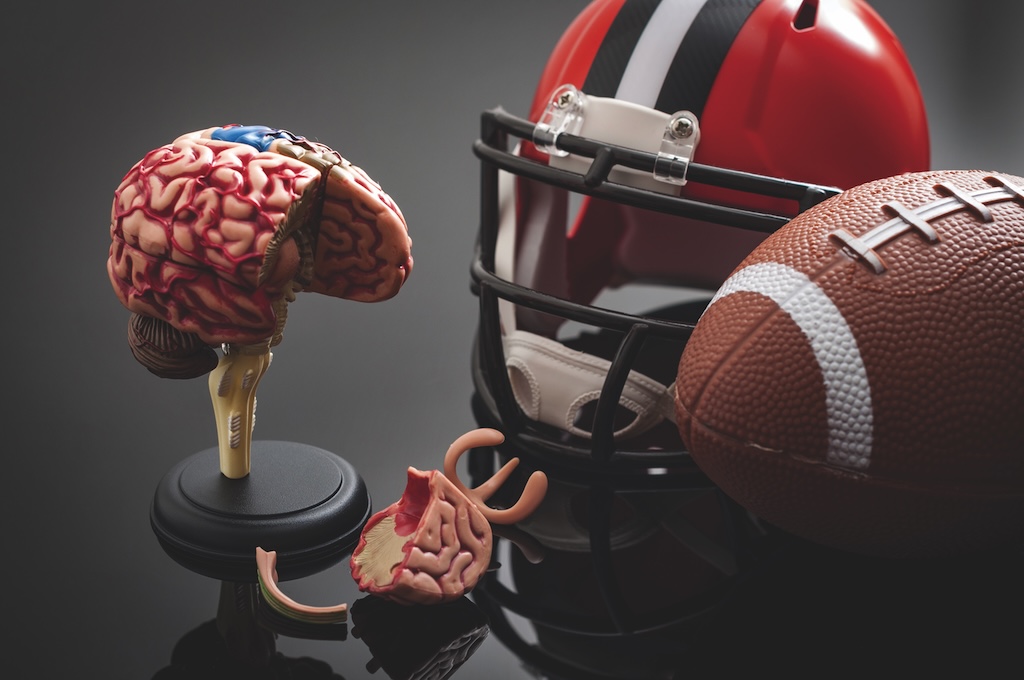
Youth athletics is outside my usual subject matter when writing for the Los Gatan. I generally prefer local politics, planning debates and the town’s quieter corners. What follows will likely ruffle feathers, particularly for the faithful, my wife, Lissa, included, who treat football like secular scripture. We cherish the energy of Friday night lights at Los Gatos High School as much as anyone, which is precisely why what I have to say next isn’t easy.
Before the angry letters begin arriving at the editor’s desk, let me establish my credentials: Football is baked into my very collegiate DNA.
The first intercollegiate football game in history was played on Nov. 6, 1869, between Princeton and my alma mater, Rutgers. In a chaotic contest that looked far more like a brawl of rugby and association football than the modern gridiron, Rutgers won 6–4. A century later, in the autumn of 1969, I stepped onto campus as an eager Rutgers freshman and sat in the stands for the official centennial rematch.
It was a nationally televised affair. Rutgers dominated, shutting out Princeton 27–0. When the final whistle blew, the stadium erupted. Ecstatic fans surged onto the field in a frenzy of Scarlet Knight pride and tore the goalposts down. I understood then, as I do now, the tribal magic of the sport: the spine-tingling roar of the crowd, the camaraderie, and the physical theater that binds communities together.
Yet love for a tradition should never blind us to its human toll.
We live in an era characterized by intense public handwringing over how to shield the next generation from emerging hazards. Right now, state legislatures and school boards across the country, including California, are aggressively moving to restrict social media access for young teenagers to protect developing minds from psychological harm. In Silicon Valley and Washington, ethicists and policymakers debate whether to curtail or strictly regulate artificial intelligence before its societal consequences spin out of control.
We rush to protect adolescent brains from digital algorithms. Why, then, do we remain passive when it comes to the physical violence inflicted inside a football helmet? If we are serious about guarding developing minds, we need to ask the uncomfortable question: Why aren’t we restricting, or outright banning, tackle football for youngsters?
This is not a knee-jerk overreaction, nor is it a new debate. The scourge of chronic traumatic encephalopathy (CTE), the progressive, fatal brain degeneration caused by repeated blows to the head, has haunted football at every tier for decades. A landmark New York Times investigation highlighted what neuropathologists have warned about for years: CTE is not merely an occupational hazard for aging NFL veterans taking million-dollar hits. Researchers at Boston University have diagnosed CTE in dozens of deceased amateur athletes who never played a down of professional football, including athletes who died before their twentieth birthdays.
Science shows that CTE is rarely caused by a single, dramatic, bone-jarring concussion. Instead, it is driven by the steady accumulation of sub concussive hits, hundreds of routine helmet collisions sustained over consecutive seasons of blocking and tackling. A child’s brain is literally tethered within an unfinished skull, its neural pathways still wiring. Asking an eleven-year-old or even a freshman in high school to absorb repetitive head trauma is institutional neglect.
Brain trauma is only part of the ledger. Beyond the headlines about CTE lies the quiet epidemic of orthopedic wreckage. Walk around any reunion of former high school and collegiate football players, and you will see the physical invoice: chronic lower-back pain, blown knees rebuilt with titanium, shredded shoulders and osteoarthritis that begin in one’s thirties and lingers painfully for life.
None of this requires that we abolish the sport entirely at the professional or collegiate levels. Nor does it mean benching youth athleticism. Non-contact flag football offers identical lessons in discipline, strategy, conditioning, and teamwork, without requiring an adolescent brain to act as a shock absorber.
Tradition is powerful, and memory is sweet. Fifty-seven years after Rutgers students tore down those goalposts against Princeton in the centennial game, the thrill of college football still quickens my pulse. But nostalgia cannot outweigh medical facts. If our modern society can muster the moral clarity to regulate social media feeds and algorithmic code to safeguard our children’s futures, surely, we can find the courage to protect their brains. It is time to blow the whistle on youth tackle football.