

By Tom Herbert
Los Gatos prides itself on disciplined municipal oversight, with officials highlighting strict data limits and deliberate council approvals for Automated License Plate Readers (ALPR) operated by private vendor Flock Safety. Yet behind this polished image lies an administrative breakdown, a lack of binding local ordinances, and weak internal oversight on our streets.
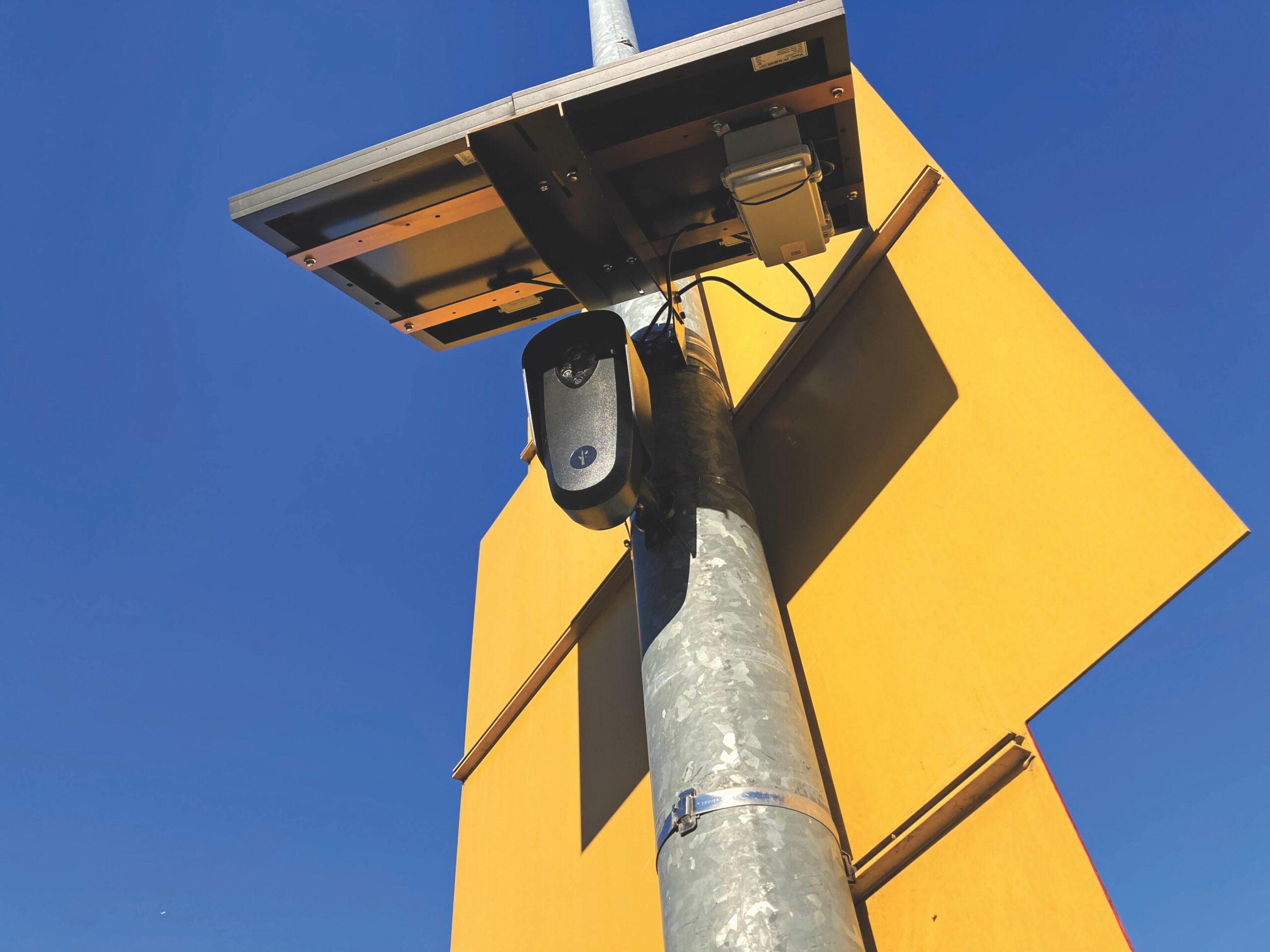
My concerns began when an ALPR camera appeared on a utility pole at More Avenue and Kathy Court. Trying to identify who authorized it led to a runaround. Responding police officers had no record of who approved the unit or whether it was permitted. Inquiries to the Town produced conflicting explanations; eventually one staffer told me that Monte Sereno had installed the camera and told me to contact that city. Directing Los Gatos residents to a separate council in which they have no vote raises serious democratic questions.
Municipal records show this isn’t just an administrative glitch; it exposes a multi-agency governance gap. According to Monte Sereno’s January 2025 Council packet, Monte Sereno approved a contract with Flock Safety for up to 19 cameras, including several inside Los Gatos to form a security perimeter. Records disclosed to date show no Los Gatos Town Council vote specifically approving these Monte Sereno-funded camera locations within Town boundaries.
Instead, staff from both municipalities met informally, relying on Flock Safety to apply for permits after the agreement was signed. To date, the Town has not produced the encroachment permit or license agreement that its published procedures appear to require for equipment placed on public property.
The funding raises additional questions. Monte Sereno initially budgeted approximately $111,000 for the system and later approved using $71,850 of its annual Supplemental Law Enforcement Services Fund (SLESF) allocation for installation and implementation. Under California Government Code § 30061(c)(2), a municipal council must appropriate SLESF funds in accordance with a written request from the police chief or chief administrator, using the public-hearing procedure specified in the statute. Because Los Gatos administers the joint police department, residents deserve an accounting of which council approved each expenditure and whether statutory requirements were satisfied.
Even if properly permitted, the police policy governing these systems is flawed. Under LGMSPD Policy § 429, officers may search license-plate data for broadly defined purposes, including “investigative leads.” The US Supreme Court has not yet squarely addressed today’s interconnected ALPR networks—a reason for Los Gatos to adopt stronger local safeguards, not a reason to leave such searches governed by vague internal standards.
Residents inspecting these systems encounter a profound double standard. These cameras continuously collect vehicle and location data about law-abiding citizens, yet the Town has not produced basic records establishing whether the cameras themselves were properly authorized. Vendor confidentiality provisions alone do not displace the California Public Records Act. Contracts, permits, installation records, policies and aggregate usage statistics are generally subject to disclosure unless the Town identifies a specific statutory exemption.
At its core, this chaos reflects a lack of independent oversight and transparency. Neighboring jurisdictions are recognizing these risks. Santa Cruz terminated its Flock contract, while Santa Clara County prohibited the Sheriff’s Office from using Flock as a vendor because of concerns about data security and information sharing. Flock now faces a California class action alleging unlawful collection and sharing of driver data; the complaint cites reporting about Los Gatos and other Bay Area deployments. As neighboring jurisdictions reconsider or terminate their relationships with Flock, Los Gatos cannot afford to remain passive.
Public safety and constitutional rights are not mutually exclusive. If Los Gatos continues using Flock cameras, the Town Council should adopt a 10-point Bill of Rights for automated surveillance:
1. Limit automated surveillance data access—including ALPR records—to designated sworn investigators conducting active criminal investigations with a case number, or responding to active AMBER or Silver Alerts; bar non-sworn personnel, contractors, and vendors; require warrants for movement reconstruction.
2. Require independent review and oversight of query logs, configurations and access records through continuous auditing, with authority to investigate anomalies and suspected misuse.
3. Prohibit automated, bulk, or routine sharing. Permit case-specific access by California public agencies only for active investigations with a case number; prohibit federal and out-of-state access unless compelled by a court and permitted under California law.
4. Prohibit third-party hardware on Town property without Council approval and required permits; require Town ownership and control of all data, along with full municipal accountability and liability for data breaches, leaks or system misuse.
5. Establish a seven-day retention limit, except for records formally preserved as evidence in a documented investigation.
6. Require standardized physical signage on every installed camera pole.
7. Prohibit facial recognition, predictive tracking, and behavioral-profiling algorithms.
8. Require public disclosure of contracts, camera locations, governing policies,
aggregate usage statistics, sharing relationships, misuse incidents, and annual audit findings.
9. Establish meaningful administrative and civil penalties—and criminal penalties where authorized by law—for intentional surveillance misuse.
10. Pass binding municipal ordinances rather than relying on internal departmental policies.
Tom Herbert
Los Gatos
*Tom Herbert has more than 25 years of industry experience in artificial intelligence, networking software development and engineering management at companies like Intel, Facebook, Google, Sun Microsystems, NVIDIA and his own startups; he used AI to help him edit and factcheck his writing, but it was edited by a human afterwards.