

We landed at SFO after a 16-hour flight from Dubai, 12 time zones away, ready to build a home in Los Gatos. Our suitcases stayed behind somewhere. One bag made it onto the carousel: the one carrying my mahjong set. I took it as a sign.
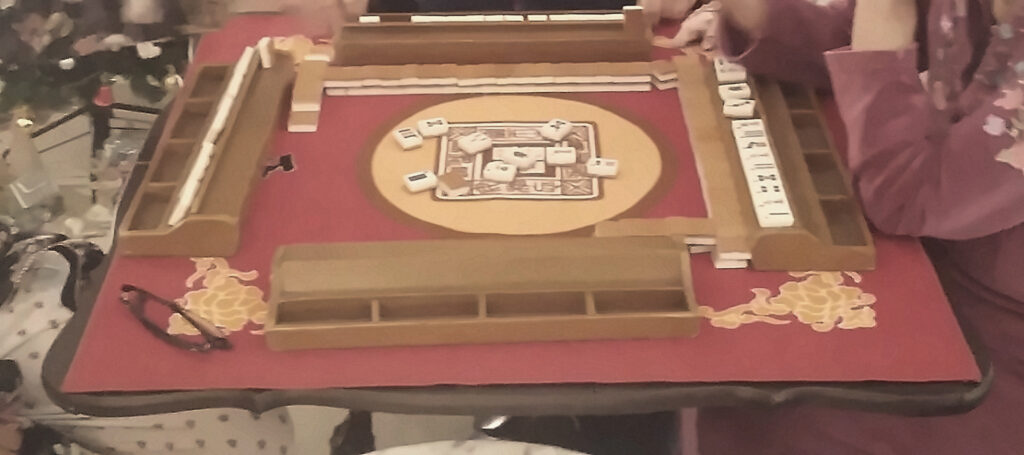
The set was my grandmother’s. She married into the family of a decorated British Army general in India, an OBE, and moved in a circle of chiffon saris and pearls for long afternoons of canasta, rummy and mahjong—with lemon tarts and chicken puffs. When my mother was expecting my brother in Singapore, my grandmother came to help. Over those few months she taught me to play. I belonged in her world. Years later, visiting us in Dubai, she pressed into my hands the hand-carved set my father had brought her from Hong Kong in the 1980s.
Picture rummy with elevated etiquette and a little poker. You watch the discards, keep a straight face and hope the tile you need is still out there. What stays with me is the touch of it, and the small world it holds: bamboos and characters, plum blossom and chrysanthemum, the four winds and the turning seasons, all cupped in your hand. Then the clickety-clack of the tiles, and the shuffle—which players call twittering the sparrows—filling the room until it blends into the hum of nature outside and nobody is anywhere else.
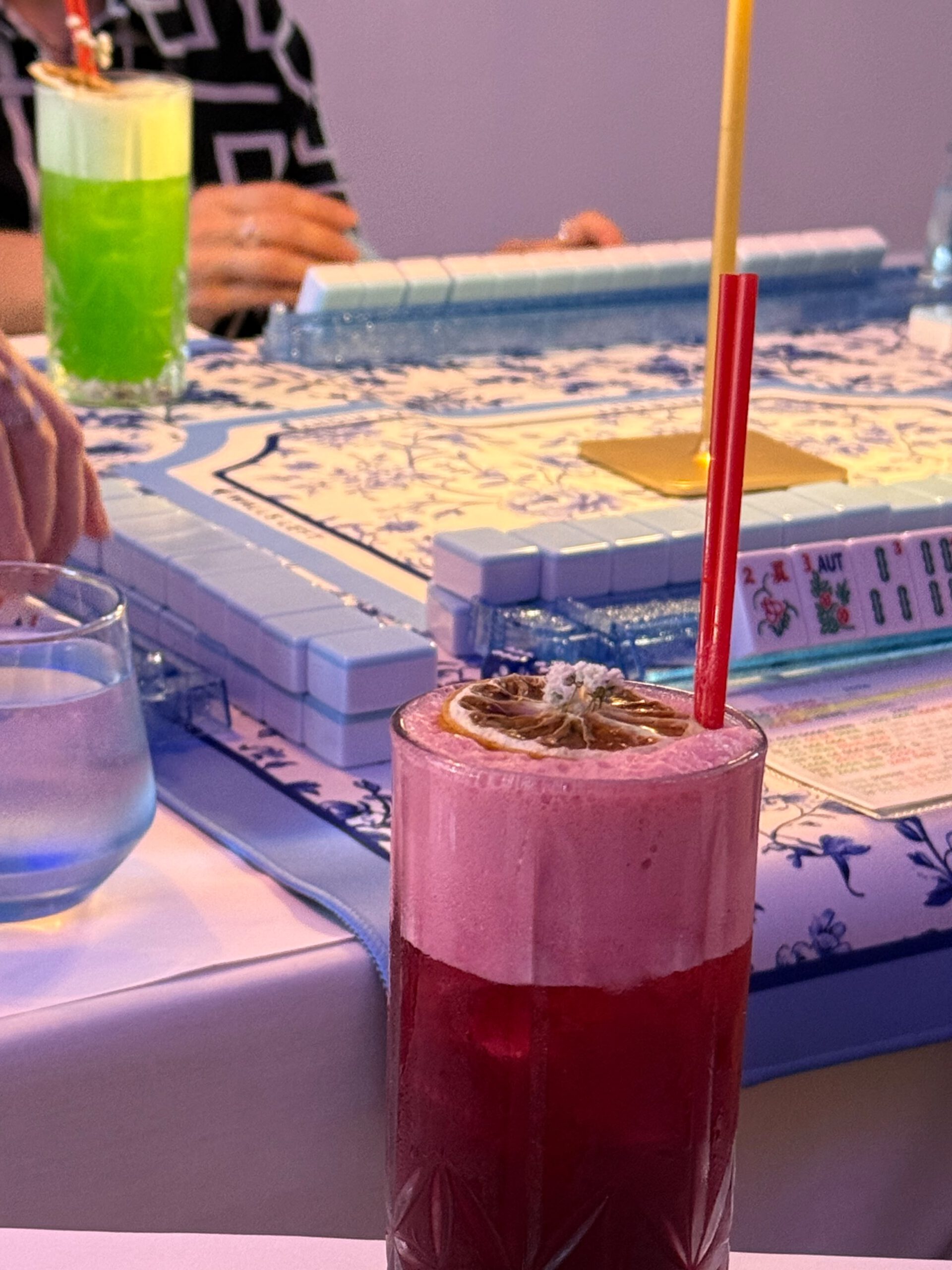
Dubai showed me what a table can do. I played there for eight years, in a city full of people from somewhere else, and watched it turn expat acquaintances into friends. So when we arrived here, I wanted that table. Through the Mahjong Social Club, I started hosting gatherings to learn, play and mingle. It’s hard to stay a stranger for long when you’re sharing a wall of tiles.
In a valley that lives on screens, an evening of tiles is tactile, analog and social all at once. It is cerebral enough for people who solve problems all day. And it’s social enough that the problems stay outside the table.
Mahjong keeps teaching me three things:
1. Love is noticing. You sit down with the same people week after week and learn how they hold their tiles and what they discard when they’re nervous. The game rewards the player who notices the other three, and I don’t think that’s only true of mahjong.
2. Life is the draw. You don’t choose your tiles; you choose what to make of them. Some hands come together beautifully—some never do. And when a wall falls, you build it again.
3. Connection takes four. For a few hours, the phones go face down and nobody reaches for them. In an age of distraction, as Pico Iyer wrote in The Art of Stillness, nothing can feel so luxurious as paying attention.
Maybe that’s why the rest of the country has caught on. For generations, mahjong was learned at home, social but private. Now it’s everywhere. Julia Roberts told Stephen Colbert she plays once a week with her girlfriends to “create order out of chaos.” Kara Swisher calls it “the pickleball of 2026, but you don’t hurt your knees.” The Wall Street Journal ran a piece titled “America Is Hooked on Mahjong. I Tried to Find Out Why.”
The tiles have moved into members’ clubs, ski chalets and even weddings. And the design houses have noticed. Hermès makes a set in laser-engraved mahogany, and Rimowa will sell you one in a $4,625 aluminum attaché. Closer to home, Los Altos’ own Jon M. Chu, whose family owns Chef Chu’s, put the game center stage in Crazy Rich Asians. Everyone, it seems, wants in. Mahjong may have gone a little hoity-toity, and maybe, just maybe, we’re here for it.
Like any kingdom worth fighting over, mahjong has its factions. Online, Facebook groups thousands strong mark their territory over who gets to teach and how. It’s like Game of Thrones, but with tiles. Happily, the Bay Area has kindred spirits who’d rather share the table than guard it, like Dinna Davis of Marin Mahjong and Vivienne Fagrell of Pink Dragon Mahjong. The more tables, the better for all of us.
So I added another table, this one with dinner. I now co-host a mahjong supper club. The tiles go down, the plates come out. And the conversation runs long after the last hand. Same game, a different home.
My grandmother’s tiles have traveled from Hong Kong to Dubai to Los Gatos, and they have no intention of slowing down. These days, they come out for winery afternoons overlooking the Saratoga hills, country clubs, fundraisers, candlelit dinners and spaces full of tables, all chatter, clatter and clinking glasses.
Consider this your invitation. Linger; the table is set.
Naseeb Dugal is the founder of The Mahjong Social Club