
There is something fitting about spending my year of “lasts” grappling with so many “firsts.” My fellow seniors and I have already started counting down: our last-first day, our last spirit rally and many more lasts to come. Yet, surprisingly, my final year in high school has forced me to rethink what it means to learn and to be a student.
This year, my school implemented a brand-new AI-acceptable-use policy, which they require teachers to post in classrooms and include in syllabi. This change comes during a time of unprecedented AI use—and skepticism. According to a Pew Research study, 49% of American adults use AI chatbots, and 41% believe that AI will have a negative impact on society.
That tension between embracing AI while fearing its consequences makes learning how to use it responsibly more important than ever. Schools should give students clear boundaries, but the final goal should be preparing us to eventually make those judgments ourselves.
My school isn’t alone in drawing these lines. In 2025, the California Department of Education added an Artificial Intelligence section to its Professional Learning guidelines titled, “Guidance for the Safe and Effective Use of Artificial Intelligence in California Public Schools.” It clarifies that this “information is merely exemplary” and not mandatory in any way. The lack of a single approach shows schools are still figuring out what responsible AI use looks like for themselves.
When an administrator announced the new policy, confused murmurs rippled through the gym. My classmates wondered what purpose it served. After all, the system relies on our Honor Code. A six-category chart cannot effectively police a tool accessible from every student’s laptop and phone.
I believe these guidelines ultimately serve a purpose beyond enforcement. Every time I decide whether I should ask AI to explain a concept, help me debug code or edit a sentence I’ve written, I have to consider when that assistance turns into replacement. Those guidelines cannot make the decision for us, but they remind us that AI should be a tool for deeper learning—not a shortcut or replacement.
My class will graduate before society has settled on a definitive answer for how AI should fit into our daily lives. We will have to constantly decide for ourselves whether the technology we use expands possibilities or replaces human innovation.
We all need to ask ourselves whether a new piece of technology allows us to accomplish more than before while also weighing what we might lose—human ingenuity or authenticity—by letting it do more for us. For students, that could look like deciding whether your AI use is truly helping you understand a tough concept, or if you’re turning to it to bypass the process of real thinking. Outside the classroom, the stakes are higher, but the considerations remain the same.
AI should not be something we fear, but neither should it be something we use blindly. AI will inevitably unlock countless more “firsts” as the years go by. Our job—as innovators, educators and students—is to make sure those new possibilities help us learn and create more, rather than replacing our ability to do so.
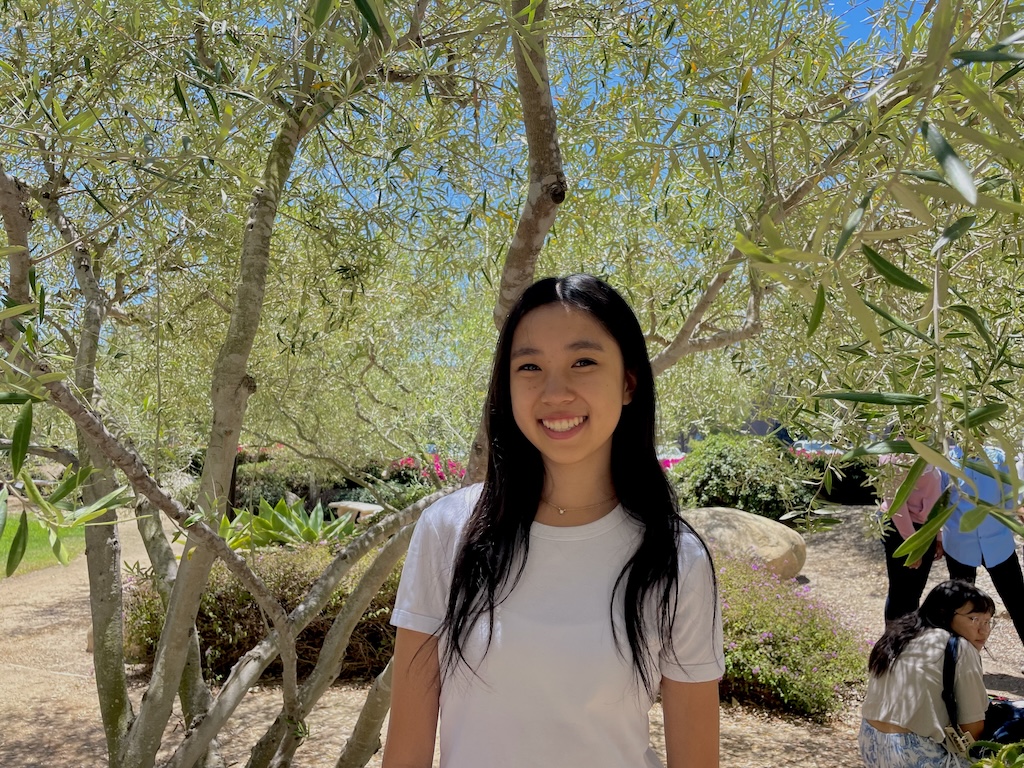
Chelsea is a high school senior at The Harker School who loves all aspects of journalism. She is also the editor-in-chief of her school paper. She joined the Los Gatan as a contributor to learn more about her local community and give back to Los Gatos through writing.