
By Sasha Ryu, Contributor
On Sept. 15, the Town Council held a special study session to share an overview of the plans to redesign the often congested Highway 17/Highway 9 interchange near downtown Los Gatos.
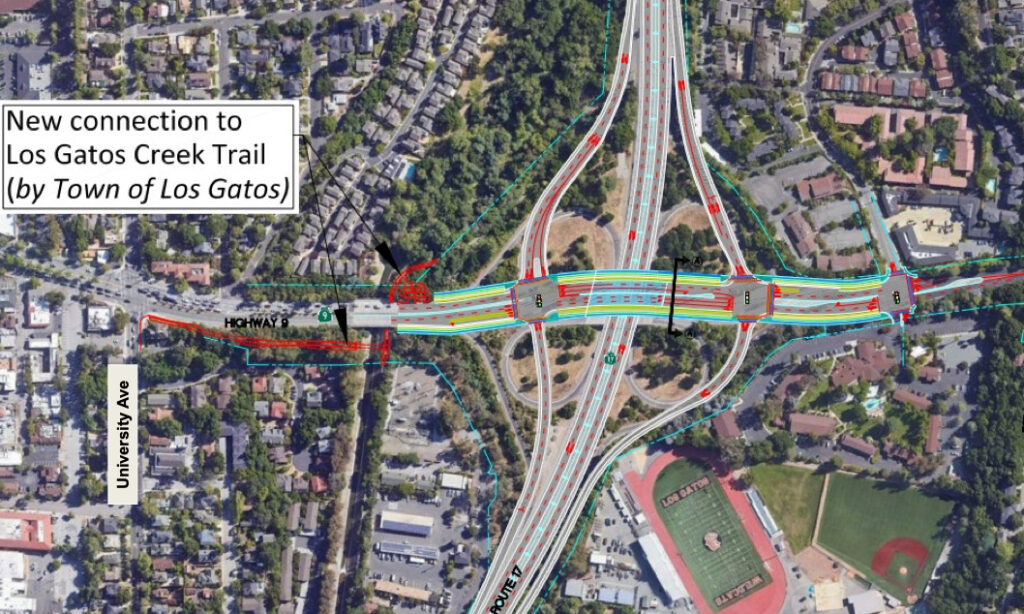
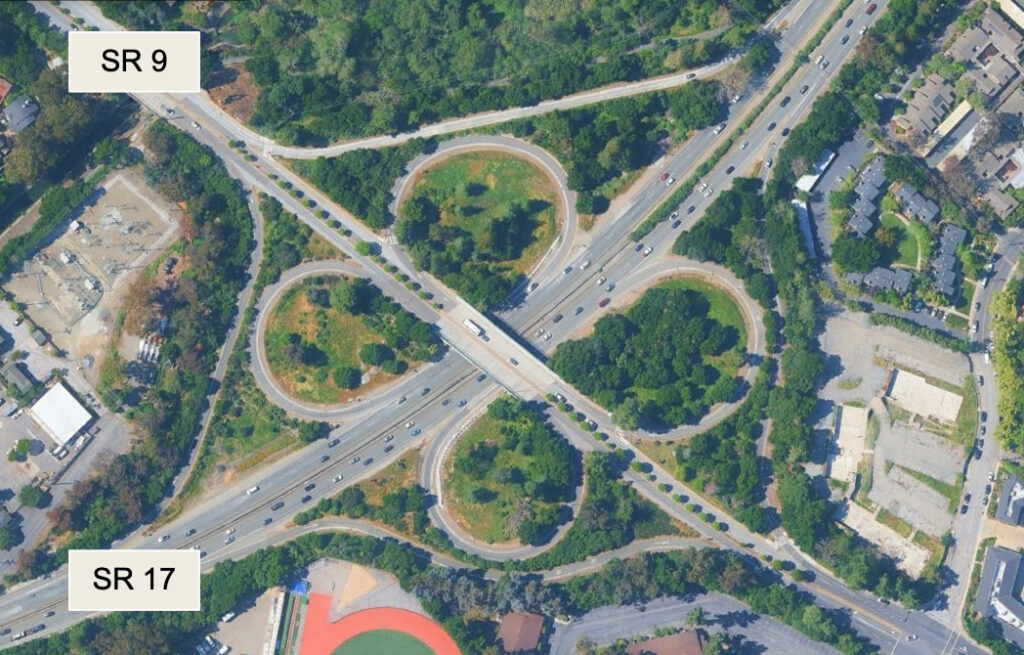
The plan comes as part of a joint initiative between the Town of Los Gatos, the Santa Clara Valley Transportation Authority and the California Department of Transportation to ease gridlock beach traffic on the highway and in Los Gatos by replacing the aging cloverleaf interchange with a “spread diamond” configuration.
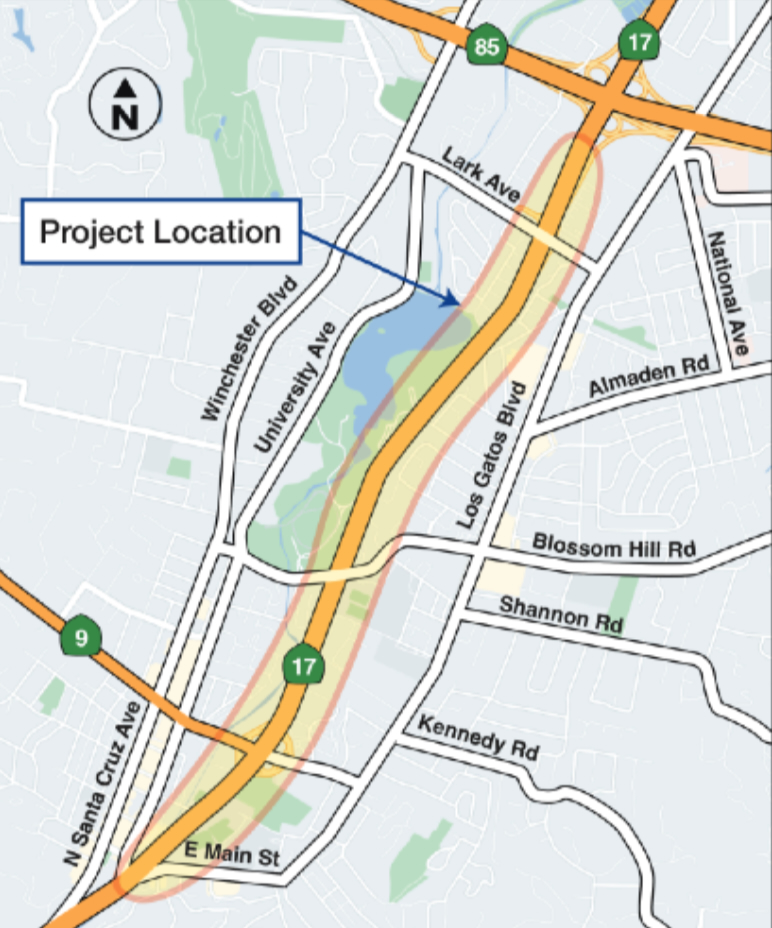
At the meeting, VTA project manager Chris Lilley explained that the current design creates a bottleneck due to the short distances between the on-ramps and off-ramps. During weekends and heat waves, when traffic tends to be heaviest, drivers often exit the freeway to avoid the slowdown and end up driving through Los Gatos. This, in turn, contributes to the “traffic degradation and congestion” that often plagues streets like University Avenue and Winchester Boulevard on popular beach days.
The proposed redesign would add a third lane in each direction of Highway 17 between Lark Avenue and the interchange, install ramp meters on both on-ramps and replace the interchange’s outdated overcrossing with a wider, six-lane structure. The plan also adds a high-occupancy vehicle lane on the northbound diagonal on-ramp to discourage drivers from jumping the queue and worsening cut-through traffic.
According to 2022 VTA data, approximately 24% of the cars on Highway 17 cut through Los Gatos to bypass the traffic bottleneck during peak weekend commute hours. Lilley said the proposed redesign is expected to bring these cars off local streets and back onto Highway 17 in three main ways.
First, the added lanes would let traffic build up further from the interchange before drivers give up and exit onto local streets. Second, the redesign itself should close the gap between the interchange’s typical weekday throughput of about 3,900 vehicles per hour and its reduced beach-weekend throughput of roughly 3,300 vehicles per hour. Finally, the new ramp meters would give operators more ability to manage how much traffic enters the freeway at once.
(Town LG)
Udit Molakatalla, the project’s traffic engineer from DKS Associates, also discussed the redesign’s potential impact on navigation apps directing drivers to cut through Los Gatos to get to the beach.
Most navigation apps, Molakatalla explained, route drivers based on optimal travel time between two points. As Highway 17 becomes congested, those apps begin directing drivers onto local streets like Winchester Boulevard, University Avenue and Los Gatos Boulevard. As those streets begin to fill up, traffic then cascades deeper into local neighborhoods to try to find a faster path.
The goal of improving the highway’s throughput, Molakatalla said, is to reverse that cascade and make the highway once again the fastest, most efficient route, so the apps redirect traffic back onto the freeway rather than through Los Gatos.
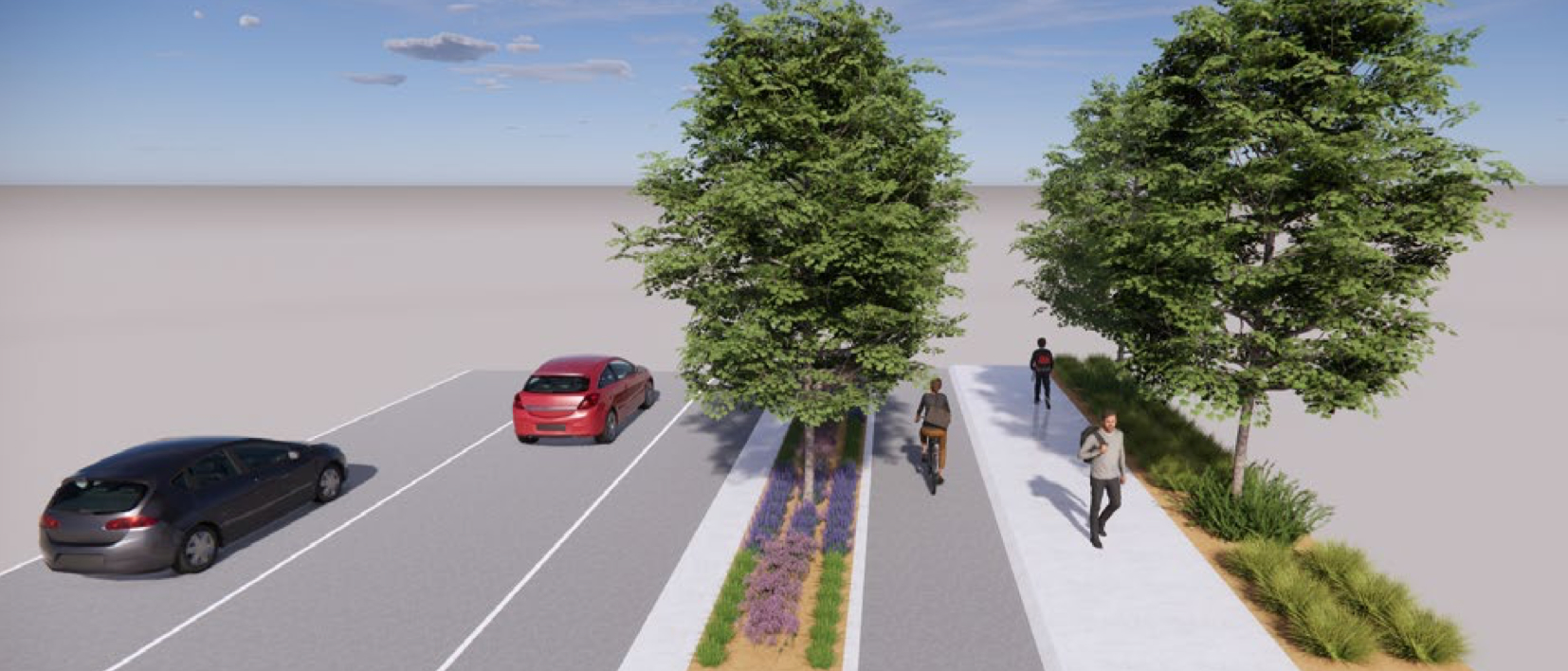
The plan also aims to improve safety conditions for bikers and pedestrians by creating wider sidewalks, buffered bike lanes and a better connection to the Los Gatos Creek Trail.
“What we’re trying to accomplish is to eliminate State Route 17 as a barrier to active transportation,” Lilley said.
One quantitative safety measure used in the project is known as Bicycle Level of Traffic Stress, which evaluates various street characteristics to determine how stressful a given roadway is for cyclists. According to Lilley, the existing interchange rates a 4 on the scale, the worst possible LTS score, which the Active Transportation Resource Center defines as “not suitable for children or most adults.” The proposed redesign is projected to improve that rating to a 1, the best possible LTS score, which the ATRC defines as “comfortable for all ages and abilities including children.”
Lilley acknowledged that the shift from today’s free-flowing ramps to intersections controlled by traffic lights will cause modest increases in travel time along Highway 9. He said the trade-off was a deliberate effort to make the road safer for bicyclists and pedestrians, particularly given the interchange’s proximity to Los Gatos High School.
The project’s traffic study examined about 19 intersections in the surrounding area, though it may not capture every affected street. Not all intersections in the study area will show improvement under the proposed design, Lilley said. Some will see modest increases in delay, most notably at two new signalized intersections.
The estimated cost of the project has risen to $178 million, a $16 million increase from a 2025 estimate. The roughly $13.2 million in funding from Measure B, along with the roughly $1.4 million from the Town that’s already been committed to the project should be nearly enough to complete the final design phase, Lilley said.
The project is currently in its environmental clearance phase, which began in 2021 and is set to wrap up next year. The design and engineering phase will follow, running from 2027 to 2029.
If all goes according to plan, the Highway 17 interchange revamp will be finished by 2031.