

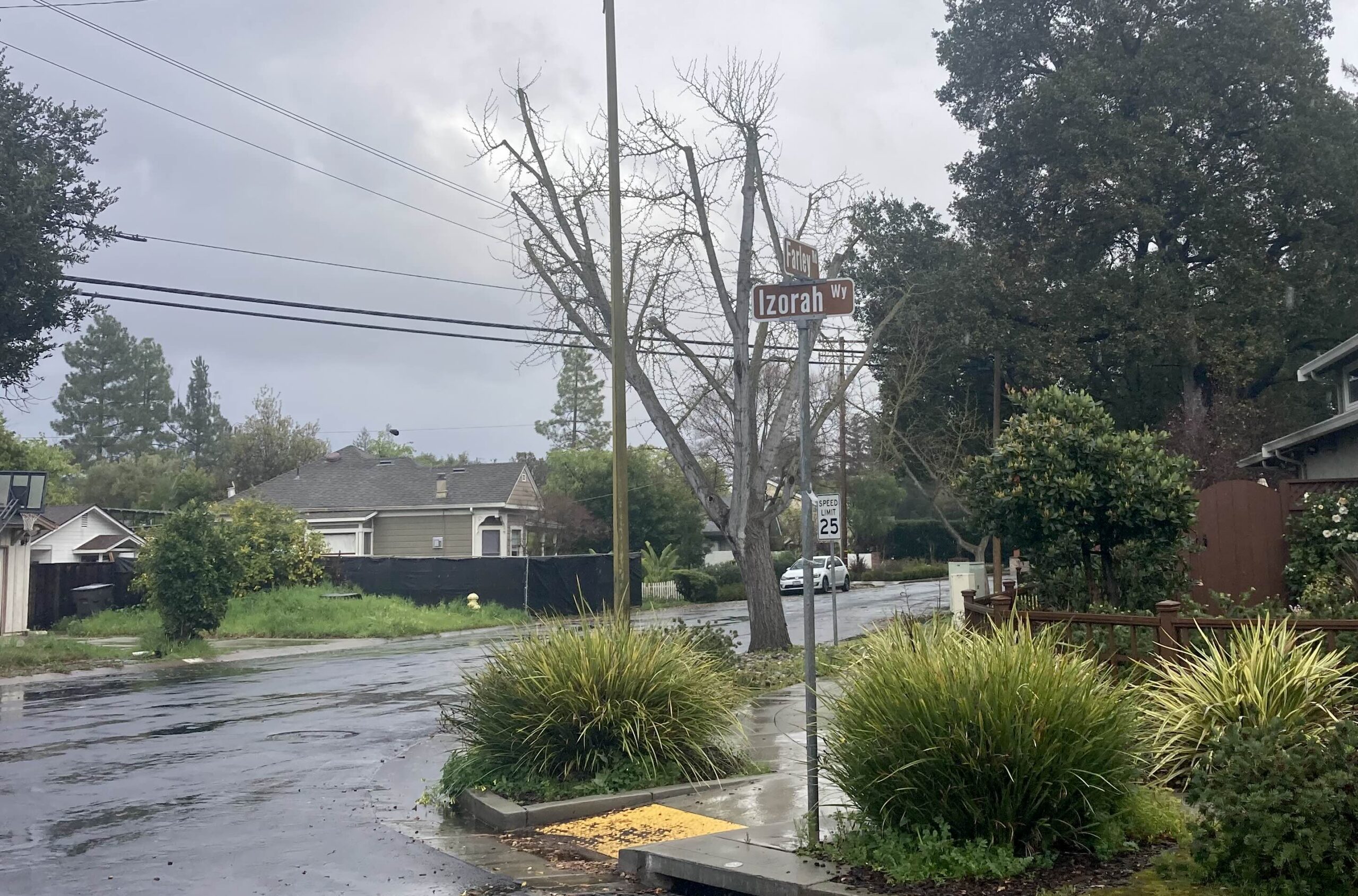
Since the 1950s, our Los Gatos neighborhood has been a semi-rural enclave of single-family homes nestled among dark, quiet streets defined by the sound of cicadas. That changed in 2018, when the West Valley Muslim Association moved into the former Jehovah’s Witness church on Farley Road.
Today, our neighborhood experiences year-round disruption. WVMA’s building has a stated capacity of around 1,200 people, but includes less than 200 on-site parking spaces. The result is predictable: overflow parking on residential streets, with visitors walking blocks to the facility. Members travel for daily prayers and numerous activities, up to 14 per day. On Friday afternoons, traffic becomes so congested that residents can be trapped in their driveways.
During Ramadan, the impact intensifies. For 30 consecutive days, activity begins before sunrise and extends late into the night. Vehicles speed, block driveways and crowd narrow roads with no sidewalks. Pedestrians, including families, walk in the dark roadway. Neighbors are kept awake by sporadic car alarms, continuous slamming doors, loud voices and headlights streaming into bedroom windows. In addition, residents have expressed concern that emergency vehicles could not reliably access the area.
A failure of oversight
In 2024, residents reviewed WVMA’s Conditional Use Permit (CUP) and discovered it had inherited decades-old approvals granted to the previous owner, whose operations were less intensive. The former church held just two weekly services (between 8am and 10pm) and did not generate overflow parking or sustained traffic.
When residents raised concerns, Town staff acknowledged that applying updated operating parameters, consistent with other religious institutions, seemed reasonable. The Town indicated it would help.
Two years later, there has been minimal change to address the intensification and safety concerns. Residents have documented over 30 apparent CUP and municipal code violations. But Town staff has recommended approval of WVMA’s application to expand operations, potentially allowing activity from 4am to midnight, year-round, with no meaningful limits.
Now, WVMA has asked for a CUP modification to allow it to operate for up-to 20 hours daily. This raises a fundamental question: why expand permissions for an organization that has not complied with existing ones?
The reality on the ground
At the March 31 Planning Commission meeting, Commissioner Rob Stump described Farley Road as “a disaster waiting to happen.” He noted that traffic has increased to approximately 4,000 vehicle trips per week, a dramatic escalation from about 400, on a narrow, unstriped residential road. He also observed pedestrians walking in the roadway at night and expressed concern for public safety.
This matters beyond Farley Road
Approving an expanded CUP in a residential (R-1) zone does not just affect one street, it establishes a precedent. If the Town allows near–round-the-clock, high-intensity use here, it signals that similar expansions could be permitted in other Los Gatos residential neighborhoods.
In practical terms, it means any neighborhood with a similarly zoned property could face comparable traffic volumes, parking overflow, and safety risks. Farley Road would not be an exception, it would become a standard model.
The broader constraint
WVMA argues its operations are protected under the federal Religious Land Use and Institutionalized Persons Act (RLUIPA). While the law serves an important purpose, its application can limit a town’s willingness to enforce local zoning standards. This is not about religion. It is about land use, public safety, and the responsibility of local government to enforce codes fairly and consistently.
A community asking for basic protections
Our Farley Road Neighborhood Coalition represents approximately 70 households within a six-block radius. We include seniors, families with young children and working professionals, residents who rely on the Town to safeguard basic quality-of-life standards.
Instead, we have seen reliance on applicant-funded noise studies and inaccurate infrastructure data. When the Town reported incorrect street-width measurements, residents conducted field measurements to correct the record. Even when impacts do not exceed technical thresholds, they are real. A finding that noise is “within limits” does not mean residents can sleep, or that their health and safety are unaffected.
What we are looking for
We are not asking for special treatment. We are asking the Town to do its job:
- Enforce existing CUP conditions and municipal codes
- Conduct independent, unbiased traffic, noise and environmental studies
- Evaluate public safety risks, including emergency vehicle access
- Apply consistent standards, as seen in comparable cases such as Hillbrook School
The Planning Commission has asked residents to participate in—and split the cost of—mediation with WVMA. As noted by Town Attorney Gabrielle Whelan, it is reasonable to expect the applicant, who is seeking expanded entitlements, to bear that cost.
At a recent meeting, Jeffrey Barnett described this as the most difficult decision of his six years on the Planning Commission. For residents, however, the issue is straightforward. We are not experts in zoning law, traffic engineering, or fire / public safety issues. We are simply asking to live safely and peacefully in our homes. The Town has the responsibility, and the authority, to ensure that outcome. Not just for Farley Road, but also for the residential neighborhoods that could be next.
*Op-eds are lightly edited for clarity, grammar and space.




So no High Density housing, no 8ksqft houses, No Muslim worshipers? what do you suggest the lot be used for? empty like the adjacent lot?
I believe some compromise can be achieved. I also think some context for how religious observances impact the town. Here is the impact for the Christmas Parade. I understand this is one day, but it is over-the-top impacting residential neighborhoods. Some diversity acknowledgement would be really wonderful for Los Gatos.
Street closures typically begin as early as 3:00 AM for staging, with the main route closing around 8:45 AM – 9:00 AM and remaining closed until approximately 3:00 PM – 3:30 PM
Instagram
+2
.
Primary Road Closures
The parade route follows these main downtown thoroughfares, which are completely closed to general traffic:
North Santa Cruz Avenue: Closed from Almendra Avenue to Main Street
Town of Los Gatos, CA (.gov)
+1
.
Main Street: Closed from North Santa Cruz Avenue to Church Street
Facebook
+1
.
Almendra Avenue: Closed at the intersection with North Santa Cruz Avenue (the start of the route)
Los Gatos-Saratoga Community Education and Recreation
+1
.
Residential Street Impacts
Residential streets in the staging and detour areas are significantly impacted:
Staging Areas: Streets like Tait Avenue, Bachman Avenue, Nicholson Avenue, Massol Avenue, and Wilder Avenue are used for parade lineup and staging
Town of Los Gatos, CA (.gov)
+2
. Parking is often restricted on these streets starting early in the morning
Instagram
.
Access Restrictions: Only “approved resident traffic” is typically allowed past major barricades, such as those at Los Gatos Boulevard and Loma Alta Avenue
Los Gatos-Saratoga Community Education and Recreation
.
Detour Routes: Traffic is frequently diverted onto residential side streets like Loma Alta Avenue, Whitney Avenue, and Stacia Street to bypass the downtown core
Los Gatos-Saratoga Community Education and Recreation
.
Residential Entry/Exit: Residents living on or near the staging streets may face delays and are encouraged to plan travel outside of the 9:00 AM to 3:00 PM window.