
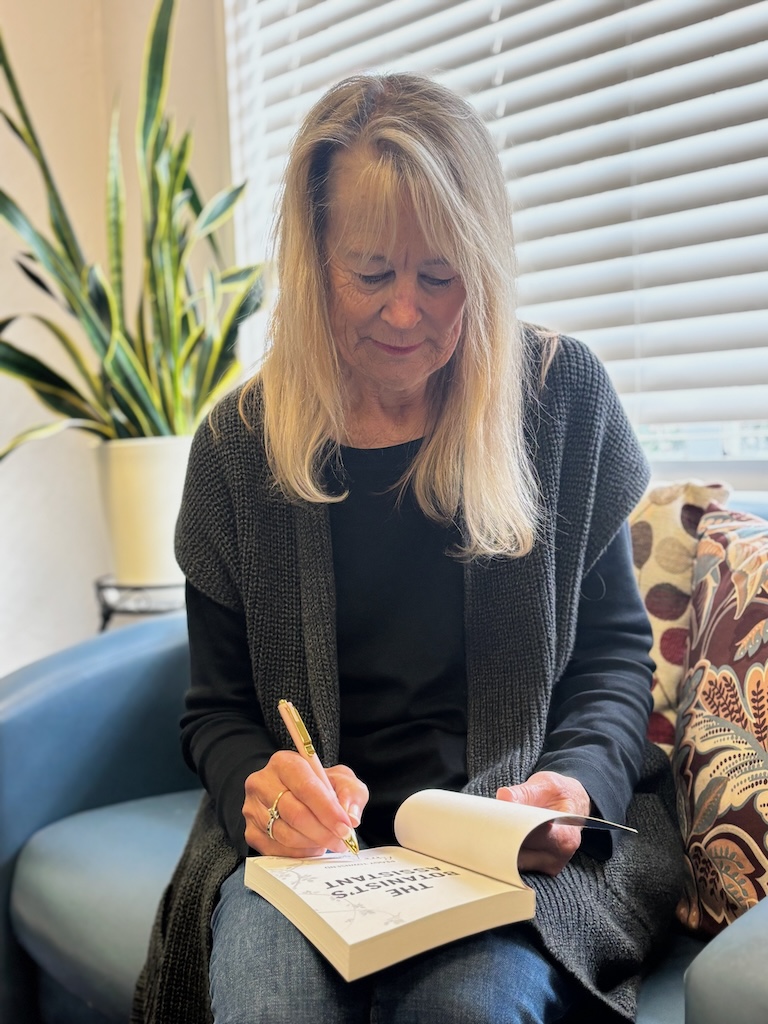
Writers are often given the time-tested advice, “Write what you know.” For Peggy Townsend, that’s exactly what she does. After 33 years as a journalist covering the cops beat and writing features for the Santa Cruz Sentinel, Townsend is well-placed as a crime fiction writer.
“I know more serial killers than is good for me,” said Townsend.
No stranger to police departments, and with convicts in her contacts, nobody is off-limits when Townsend is nosing around for a novel. Meandering through morgues, or chasing after an escaped serial killer through a graveyard at midnight, Townsend injects a hefty dose of hands-on experience into her pages.
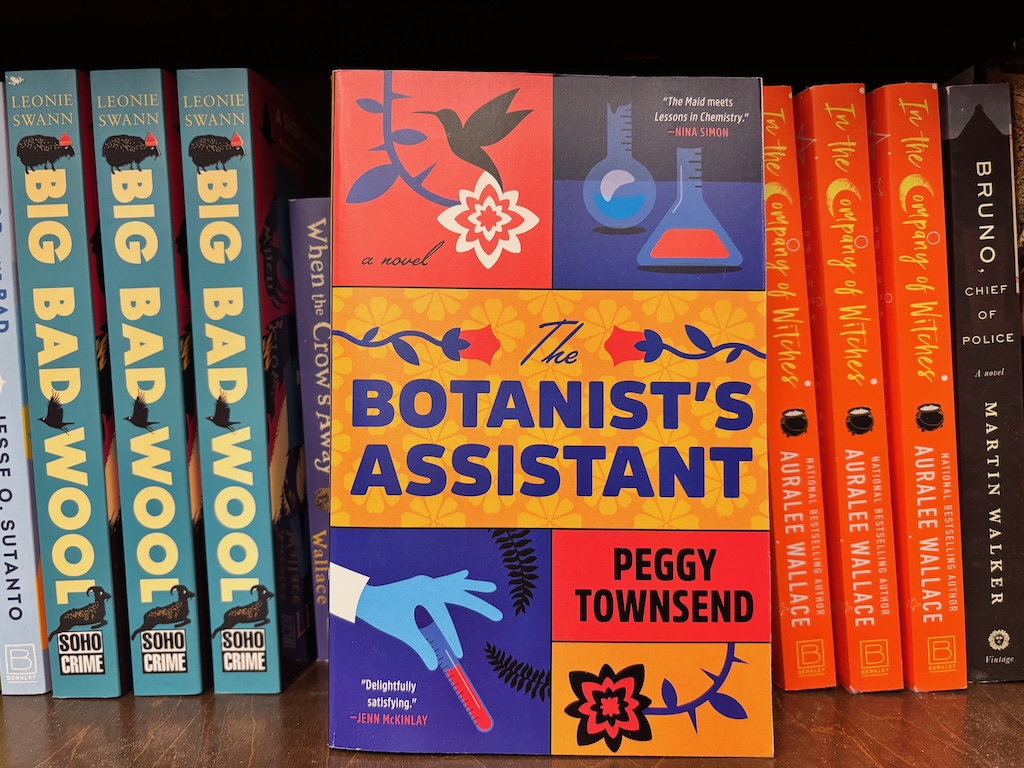
The Botanist’s Assistant, Townsend’s latest publication, centers around Margaret Finch, a six-foot-tall, big-boned, mid-life research assistant to a charismatic botanist at a small university.
When a dead body is found on campus grounds, authorities claim the cause of death as natural causes. However, eccentric, observant scientist Finch isn’t convinced. A stickler for honesty and truth (personality traits that rub others the wrong way) Finch can’t help but see the signs others are missing—or are willing to ignore. Finch finds herself thrust into the role of detective in a race to catch the killer, before the killer catches up to her.
Townsend has garnered praise and attention in the literary world, with best selling New York Times author Nina Simon describing the novel as, “‘The Maid’ meets ‘Lessons In Chemistry.’”
(Amanda Senior / Los Gatan)
A Booklist reviewer wrote, “The realistically described frame of scientific research, botany, deadly plants, and university politics and endearing, sharply-defined, layered, mid-fifties heroine who begins to find friendship and expand her life add up to a fresh, satisfying stand-alone cozy.”
Penguin Random House has released 75 cozy mysteries this year alone, with another 51 new titles hitting shelves soon. With such a high demand for the genre, it’s crucial to have a story that hooks readers, with characters that readers want to spend time with.
Before beginning a new manuscript, Townsend researches thoroughly, compiling a substantive file of detailed notes, consisting of at least thirty pages, to get where the manuscript needs to go.
“To craft believable characters, they need to be more than a list of features,” Townsend said. “What sets characters apart? How can you make them distinctive?”
Finch’s life is driven by order and routine. She lives in a cottage in the woods by a university, and drives an old-pick up truck. Hyper-aware of the treed landscape surrounding her, Finch never leaves home without her trusty chainsaw by her side. Perfect for if a road should need clearing. When Townsed settled on Finch’s nickname, “Big Bird,” she knew Finch was fully-formed.
Townsend recommends getting out in the world to find a sense of place and scene. Hiking in Carmel with her sister, she came upon the chimney and foundation of a homestead cabin, with views over mansions and houses in the valley.
“I thought, this is where Margaret lives,” said Townsend.
Townsend’s sister, a scientist with a formidable knowledge of botany, greatly influenced Finch’s special interest in botanicals, making her not only unique, but the perfect detective to piece together this particular mystery.
‘To craft believable characters, they need to be more than a list of features.’
—Peggy Townsend
The impetus for Finch came when Townsend met a Meals On Wheels service user, a Montanan who grew up in a small cabin without running water. Awkward and friendless, boys pelted her with sling-shots as she walked home from school. After thinking she’d missed out on love, she agreed to marry a churchman who needed help raising his children. Later, they ended up falling in love and had a little girl.
“I was so touched by this woman who made her life into something of beauty,” said Townsend, “Margaret wants the same things—to be loved and accepted, while also solving a murder.”
“The characters need a goal, something they want. Readers want to cheer them on —even the villains. They should change and grow through the book,” Townsend said. “Characters drive the story, but you can’t let them get lost in it.”
Townsend often goes “magpieing”—her word for gleaning interesting tidbits from others, and then blending them into quirky, unique personas.
One of her favorite phrases came when a young girl was told to, “Go get the spunk out of that horse,” so that her drunken uncle could ride the steed home.
Listening to conversations often reveals how a character converses, and is key for developing dialogue.
“I meet people and ask them their stories, noting how they talk and interact. It’s a really successful way to build memorable characters. Accepted as they are, people like to talk. They tell you things that make you cry or blow you away.”
If you are interested in creating your own quirky cast of memorable characters, starting your memoir, or penning poetry, join South Bay Writers for their May 9th meeting at 10:30am, featuring Creative Writing Instructor, Lita Kurth, author of, “Writing Memoir in Flashes.”
South Bay Writers meets monthly at Saratoga Senior Center, 19655 Allendale Ave. Members $10, Non-Members $15. southbaywriters.com