
The Los Gatos Planning Commission voted 4-1 to recommend approval of the 178 Twin Oaks Dr. 12-lot subdivision, June 1, despite environmental concerns. This recommendation will now go to the Town Council with a new list of amendments relating largely to ecological and maintenance issues. While it’s a step in the direction of development, a groundbreaking wouldn’t be expected for at least two years.
Pennant Properties Principal Jim Foley said this project has become more expensive than initially anticipated. That’s largely due, he added, to drawn-out timelines for handling complaints.
“We’ve been through an exhaustive process. The soft cost budget for this over the years, and the time that it’s taken is, just, well-beyond its original budget. So it’s literally at a breaking point,” said Foley.
What pushed this development to this position, where, after four hours of deliberation, a motion could not secure a unanimous vote? It may boil down to two words that the discussion centered on: ephemeral stream.
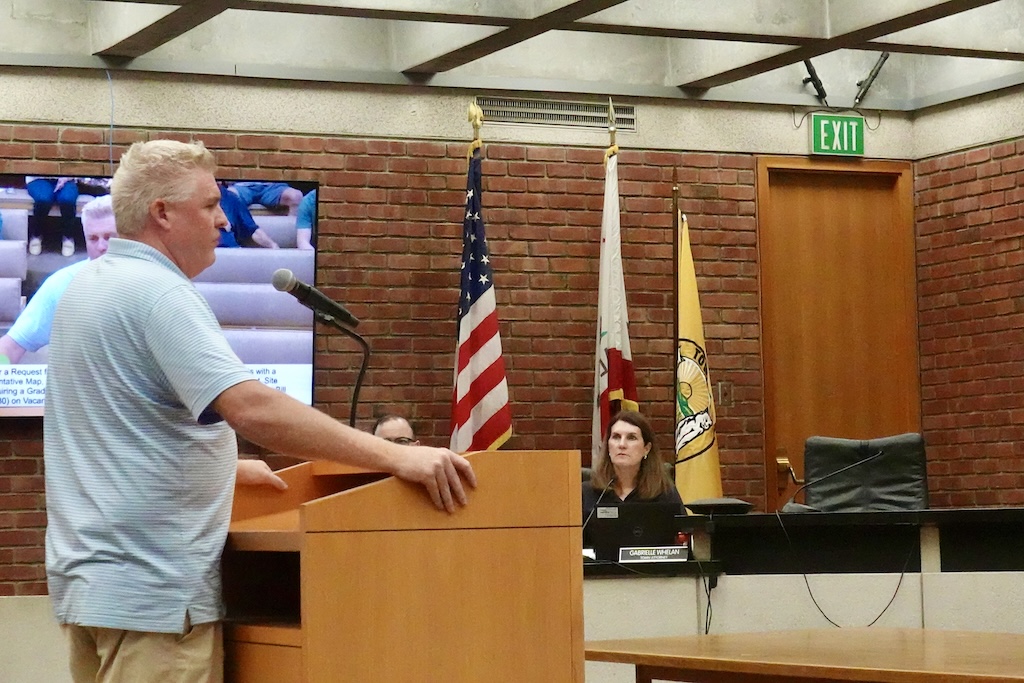
The proposed development is slated for a natural area above a small passageway that fills with water when it rains. Eight Los Gatos residents spoke to the Planning Commission with specific qualms about the development.
Los Gatos resident Cindy Clark said the project would remove 225 trees and affect 17 acres of natural space.
“It will cause an increased risk of runoff and flooding, and risk of damage to the ephemeral stream and its inhabitants,” she said during the public comment period.
Residents urged the Planning Commission not to approve the development until a full Environmental Impact Report (EIR) could be done to establish what impacts the development could have, largely in reference to the ephemeral stream. The development team, however, asserted that they have a strong team of consultants who know what to mitigate and how.
In a June 6 letter, James Lyon, a former Los Gatos Planning Commissioner and Historic Preservation Committee member, asked the Planning Commission to reject the project and instead demand a full EIR of the land. The eight-point letter states that there is “substantial evidence” for there being “one or more significant effects on the environment” that requires further analysis. The development team stated they have done the necessary testing and have a proper mitigation strategy, especially in regards to storm drainage that correlates with the ephemeral stream.
HMH Civil Engineer Rafael Hernandez explained that each house would have their own storm water treatment with two large systems in place across the development. Commissioners raised concerns for how maintenance of this would work, to which Foley had said there would be a maintenance association, similar but distinct to that of an HOA.
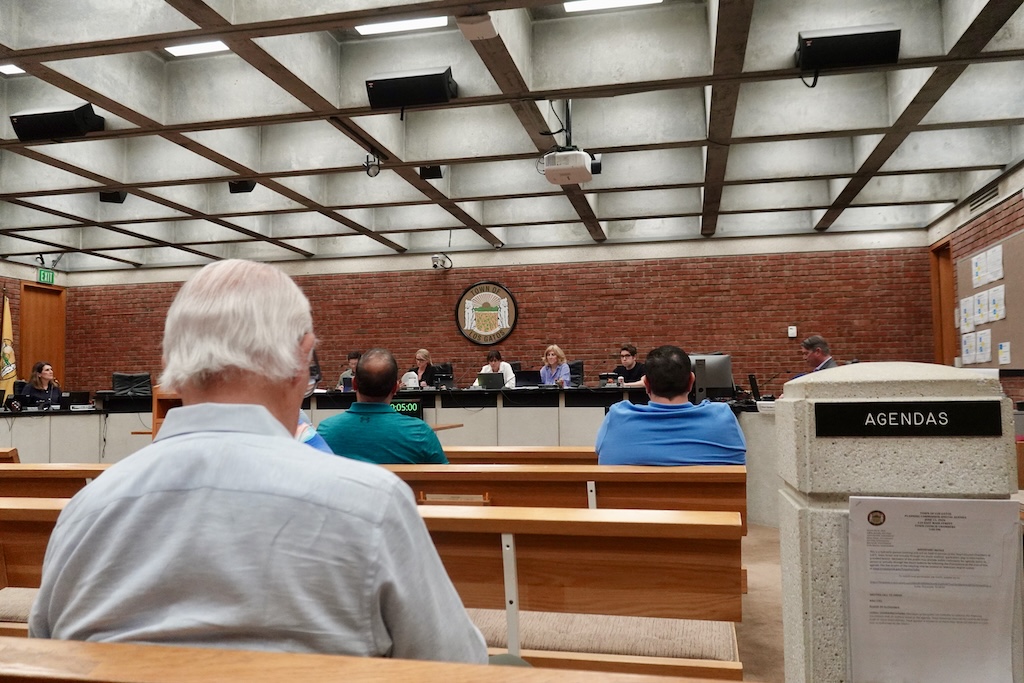
William Meleyco, a neighbor, brought up a number discrepancy in the planning, where there was a shift from 62,000 square feet to 90,000 square feet. This came up on multiple occasions, with Hernandez later explaining that it was an error that was caught in their third submission, sometime around October.
Assistant Division Manager of Raney Planning and Management Angela Darosa told the committee that this doesn’t call for any environmental re-analysis. Darosa explained that “analysis already assumed the correct disturbance area,” as they were measuring impact by units of development, not square footage, asserting mitigation risk was accounted for.
Commissioner Joe Sordi moved forward for recommendation, with a motion containing parameters for next steps. These were modified with input from Chair Kendra Burch and Commissioner Emily Thomas, who raised concerns for possible mitigation challenges. The motion stressed that work vehicles could not idle on neighboring roads –keeping work equipment strictly on site– a private road maintenance agreement, stronger understandings of the maintenance association proposed and all plants being approved on site.
Commissioner Susan Burnett did not support this approval, expressing her concerns are unresolved regarding the need for a comprehensive EIR.
“I feel more strongly to require a full EIR, which should have been done in the first place.”
The 4-1 vote included support from Sordi, Burch, Thomas and Commissioner Adam Mayer. The recommendation will be sent to the Town Council as it takes up the project.