
A few weeks back, Planning Commission unanimously supported a CUP modification for the West Valley Muslim Association’s Farley Road mosque—concerning a proposed extension of hours for prayer and formalizing other regulations. Both the Islamic organization and a neighborhood group found things to dislike in the text.
After Town staff decided the initial conditions were probably against federal anti-religious discrimination rules, the item was brought back to Planning Commission with additional restrictions; some which annoyed the Farley Road Neighborhood Coalition, and some which WVMA took issue with.
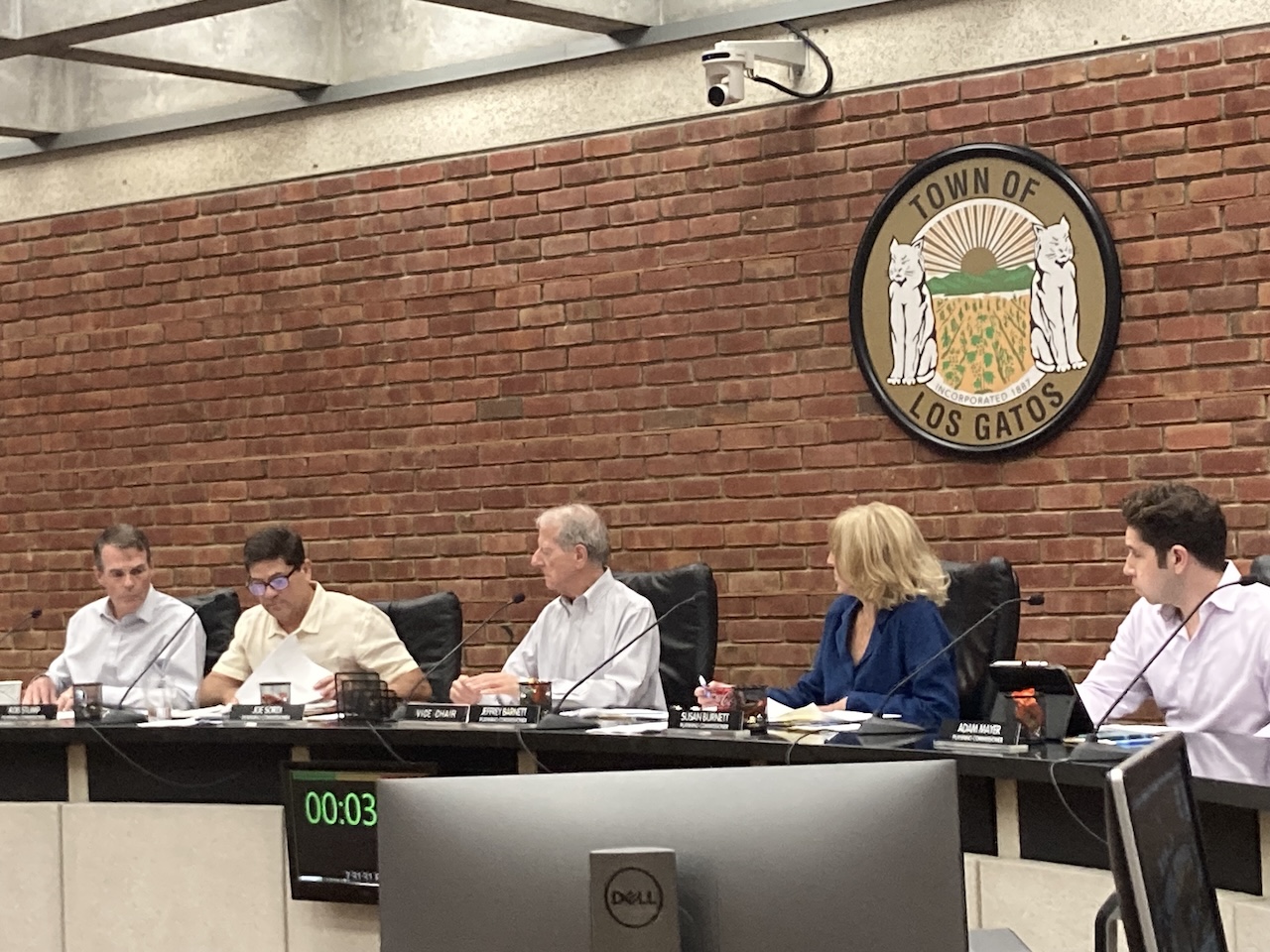
And then during a May 21 special meeting, Planning Commission finalized the update in less than an hour, passing it 4-1, with only Susan Burnett dissenting. (Both Kenra Burch and Emily Thomas were absent—Thomas had recused herself at prior meetings).
“For 365 days a year, there’s going to be action going on,” Burnett, a former nurse and environmental consultant, said in an interview with the Los Gatan, making a health case for voting against. “How can babies get to sleep?”
Burnett said the mosque has been operating successfully for years within the current hour limits. Already the traffic is too crazy, with headlights beaming into the houses in the area, she added.
“I didn’t think they were being put in a place where they couldn’t practice (their faith),” she said. “They bought it in 2018.”
Kim Ratcliff, of the Farley Road Neighborhood Coalition, said, from the start, they’ve been asking the Town for protection—by way of a modified CUP for WVMA—in order to foster compatibility. She says this has nothing to do with religion.
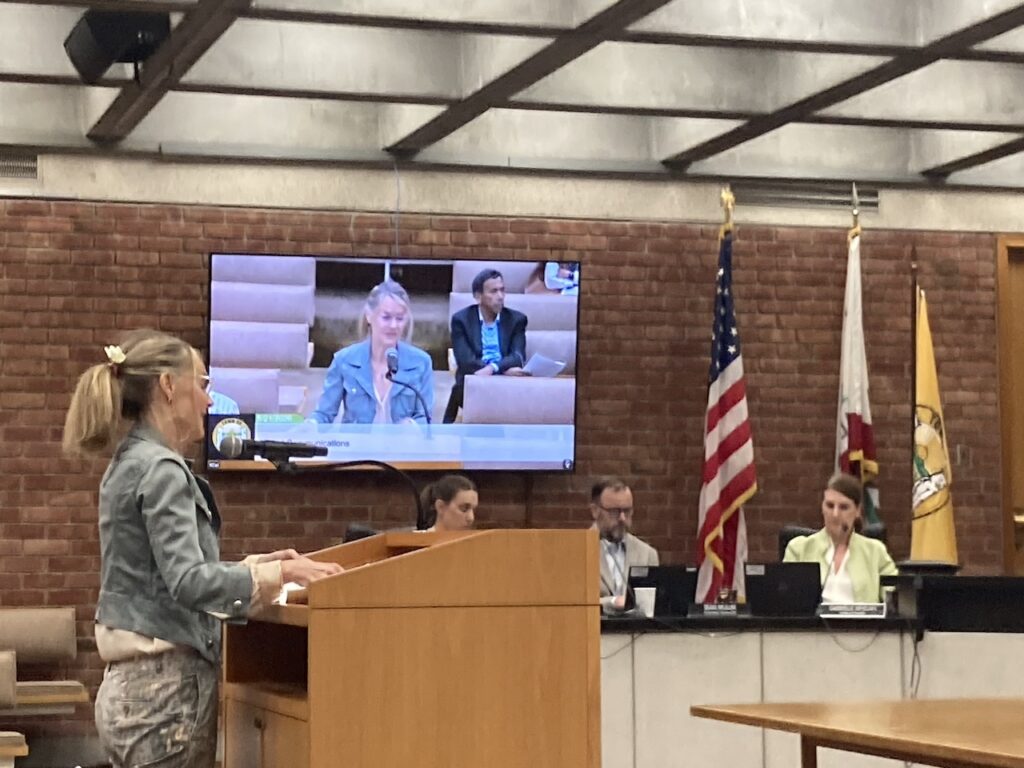
“The Farley Road Neighborhood Coalition’s goal is to protect our neighborhood’s safety and quality of life while finding a path toward harmony,” she said. “The Planning Commission’s decision represents a critical first step and a strong foundation for protecting the town and the neighbors, while aiming to provide a sustainable path forward for WVMA.”
Burnett told the newspaper some of the residents have cancer—and other ailments—and need their restorative sleep.
She incorrectly called WVMA the “West Valley Mosque Association” twice, while explaining her perspective from the dais.
But that wasn’t the part that bothered the organization’s founder Razi Mohiuddin.
“We are frankly disappointed in both the Planning Commission as well as the Town staff, in terms of the onerous conditions that have been put into place over here, which leads the Town exposed to RLUIPA violations,” he said, referencing the legislation that protects religious groups from having land use decisions weaponized against them. “Our plan right now is to follow the process, which is to appeal to the Town Council, and then determine whether we will get relief there, or if not, we will pursue all legal means necessary.”
Town staff went above and beyond the wishes of the Planning Commission, which had supported an increase in hours of operation, with a variety of strings attached. Los Gatos officials specified that the only thing Muslims are allowed to do during certain hours is essentially pray, or else they can face consequences.
“We are not asking for exceptions; we’re asking for equal terms,” Mohiuddin said. “What the Town staff and the Town Planning Commission has done is created a tremendous challenge—for themselves, to be honest with you. Because these are tremendous RLUIPA violations, and we have a number of organizations that will review this. And we will pursue all legal means.”
He says the strict approach to a slight hours-extension request to be able to legally honor their beliefs—particularly during the month of Ramadan—is setting up a “lose-lose-lose” situation.
“Why? Because if we’re not allowed to practice our faith, then our natural inclination will be to actually sell this property and move some other place,” he said. “And if we decide to do that—which is not what we want to do…no other church or school will buy this facility, given what (we) have gone through in the last few meetings over here.”
Mohiuddin says they’d likely end up selling to a developer.
“And developers—more than likely—would try to maximize the profit on this property,” he said, bringing up SB 4, a state law brought in to help generate housing units at sites owned by religious institutions. “That will allow us to build probably 150 units on this property, as an example. And that may be the way that we maximize our ability to profit, so that we can buy another place.
“I think this is where it is headed. And it’s very unfortunate.”
The Farley Road Neighborhood Coalition has continually raised issues with the mosque’s current and planned operations. The residents say the’ve seen their right to enjoy their own properties slowly erode, since the WVMA quietly moved into the neighborhood a few years back.
Mohiuddin argued that an additional condition—a left turn only sign requirement added at the May 22 meeting—will create more safety problems, not less.
This could expose the Town to lawsuits, according to Mohiuddin.