
As an orthopedic surgeon, I spend most of my day helping people decide how best to treat their injuries. So, when I tore my own anterior cruciate ligament (ACL), I found myself facing a decision I regularly discuss with my patients.
Fifteen years ago, during an awkward turn on the ski slope, I felt my knee pop and had the wind knocked out of me. I immediately knew that I’d torn my ACL, even though I still managed to ski down the rest of the slope. That night, my knee blew up like a grapefruit and felt very unstable.
The ACL is one of the main ligaments that stabilizes your knee, especially when you twist, pivot, or change direction. We see ACL tears in everyone, from teenage soccer players to weekend skiers and competitive pickleball players. Without an ACL, you’re at risk of your knee giving way, and an increased risk of meniscus tears and arthritis.
But despite being a surgeon myself, I chose not to have it reconstructed surgically.
People are usually pretty surprised by that when I tell them, but it’s a great example of how I approach treatment for joint and bone conditions in my patients.
As a busy orthopedic surgeon (and now mom of three), I have to think about what recovery would mean for my family, work, and life. I wanted to make a decision that made sense for both my knee and my lifestyle.
I also don’t happen to play many sports that require lateral movement. At the time, I loved Pilates, running, spin classes, and activities less affected by the lack of an ACL. For me, strengthening the muscles around my knee and working on stability through physical therapy was the right approach.
But in medicine, everything is a compromise, and few treatments have only pros with no cons. I managed to avoid a year of post-op rehab, but my knee “gave way” a few times when I was pregnant, and I need to be careful during sports that involve quick changes in direction, like skiing, where I wear a brace.
Now, I have a much better appreciation for the kinds of difficult decisions that patients have to make. I perform knee and ACL surgery regularly, and get the chance to offer my experiences to help patients choose. Every situation is different, and I tailor my treatment plans accordingly.
I often explain to patients that two people with exactly the same injury on an MRI might need completely different treatments. A teenager hoping to play college soccer needs a knee that can withstand constant twisting and turning, while someone in their sixties who enjoys hiking, cycling, or playing doubles pickleball casually might be better off with injections, bracing, and physical therapy, at least at first. Age alone doesn’t determine the treatment either; I have patients in their seventies who are more active than people half their age, and I want to understand what they enjoy doing before recommending anything.
The same philosophy applies to the many other joint and tendon problems I treat. Whether you come in with shoulder pain, knee arthritis, or a persistent sports injury, I always want to understand your lifestyle and needs so I can meet you where you’re at.
We’re also seeing growing interest in regenerative treatments such as platelet-rich plasma (PRP). I explain PRP to my patients by comparing it to garden fertilizer: you don’t put fertilizer on a plant and expect it to grow overnight. Rather, you’re trying to create an environment that supports growth. PRP works on a similar principle, using components of the blood involved in the body’s healing response. For some patients with knee arthritis or certain tendon problems, PRP is another option.
Having experienced a knee injury myself, I appreciate how frustrating it is when something you enjoy suddenly becomes difficult or impossible. For one person, that might mean missing a soccer season; for another, it might mean no longer being able to play pickleball with friends, walk the dog comfortably, or keep up with the grandchildren.
Fifteen years later, I still ski every winter on the knee I decided not to have reconstructed; rehab was the right choice for me. If you ever find yourself in my shoes, I encourage you to work with your surgeon to choose the right treatment plan for the life you’re trying to get back to.
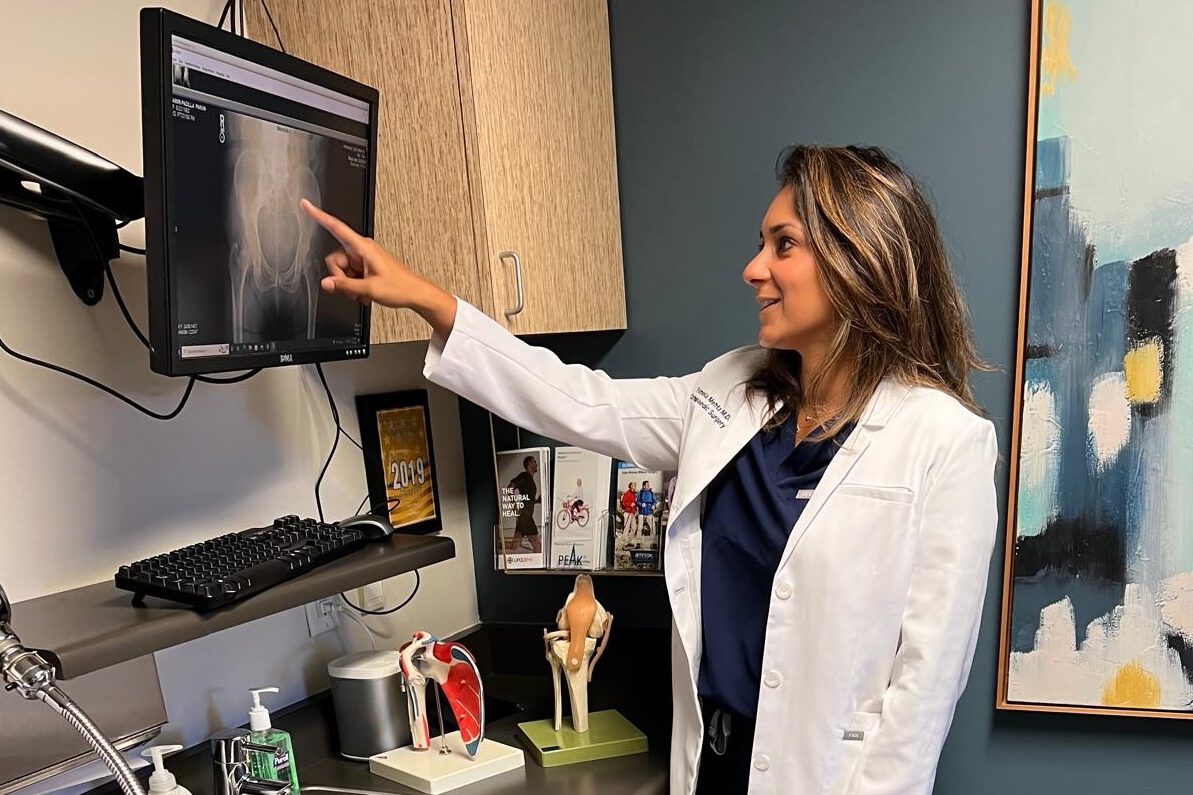
Dr. Pamela Mehta, MD, is a board-certified orthopedic surgeon and the founder of Resilience Orthopedics, caring for Los Gatos patients for over a decade. Dr. Mehta specializes in shoulder and knee conditions, sports injuries and regenerative medicine. She shares educational content online as @dr.pamelamehta and hosts The Resilience Factor podcast.