

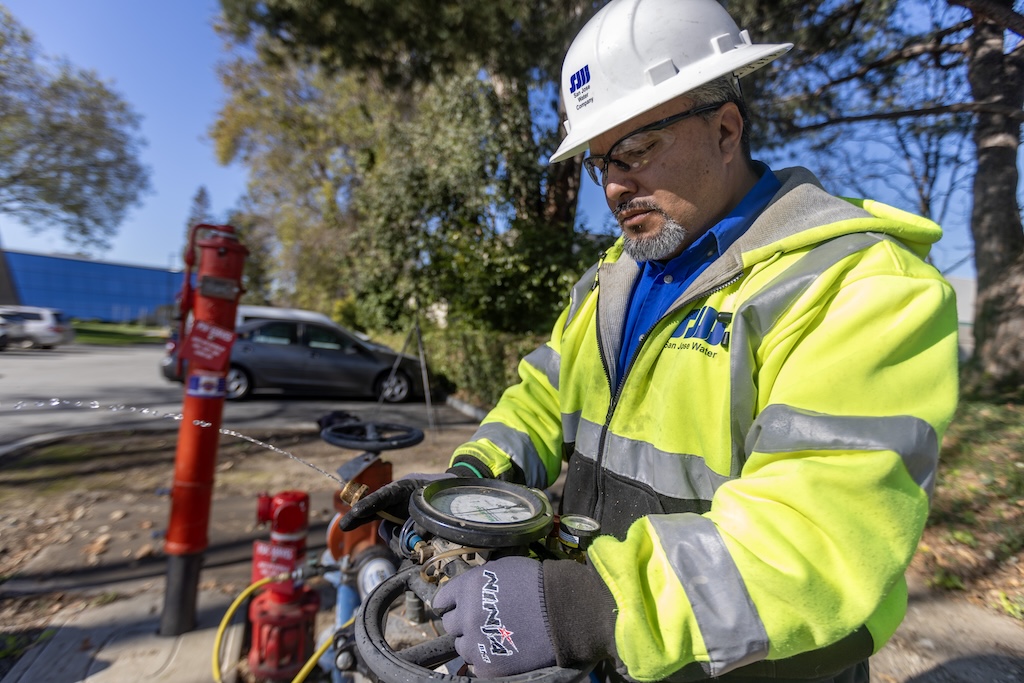
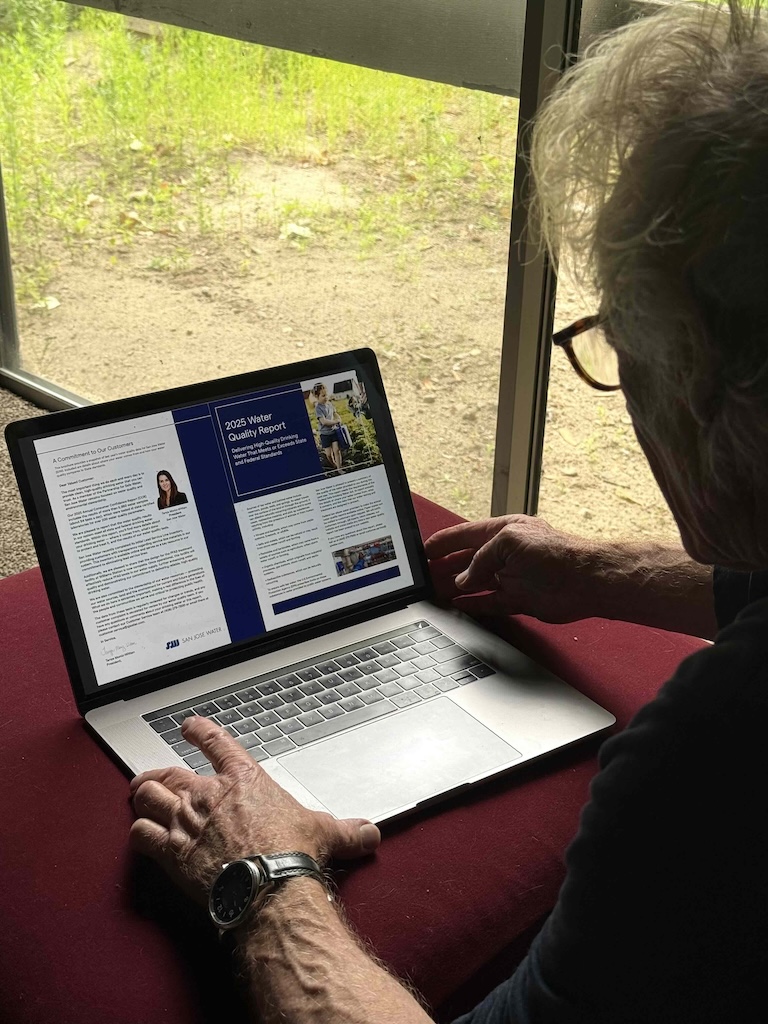
How much do you trust the liquid that comes out of your tap? According to the San Jose Water Quality Report for 2025, Los Gatos’ water clears the regulatory bar. But just because it meets drinking standards doesn’t mean it’s without contaminants.
The annual report features information about safety tests conducted throughout the past year. This 16-pager doesn’t give town or district-specific results. Instead, it splits data into three water source categories: mountain surface, groundwater and Valley Water surface water.
“There is nothing more important than delivering healthy, reliable water our customers can trust,” San Jose Water President Tanya Moniz-Witten said. “It is a responsibility we do not take lightly, and one we are committed to upholding for every community we serve.”
There were 13 regulated contaminants that were detected in the San Jose region, among 72 others that were not. Each contaminant found was below state limits, earning an acceptable mark.
Carcinogenic chemical compound found in water beyond State goal level
Los Gatos’ water is sourced primarily from mountain surface water from the Santa Cruz Mountains, which is treated and monitored before being sent to area homes and businesses. The report doesn’t mention what percentage of the town’s water comes from the mountains versus other sources. However, in a written response from Liann Walborsky, director of corporate communications for San Jose Water, this “blended supply” is normally supplied “across our 6,000-acre watershed in the Santa Cruz Mountains and treated at the Montevina Water Treatment Plant.”
The rest, according to Walborsky, is from “treated surface water purchased from Valley Water.”
She did not offer source percentages beyond offering that mountain surface water composes 10% of San Jose Water’s total supply.
Mountain surface water regions include the outskirts of Saratoga, Los Gatos, Monte Sereno and Redwood Estates. According to the report, only slight ranges of contaminants were found in entry point samples, such as chromium-6 and aluminum. While aluminum’s primary effect is a bitter taste, long-term ingestion of chromium-6 is tied to gastrointestinal cancers.
However, both metals sit in a trace range, remaining drinking-water safe, per the report.
Chromium-6 was detected in the range of non-detectable (ND) to 0.617 (in mountain surface water), which is more than 90% below the California drinking water standard limit. This range makes up for 80% of all detections according to the California State Water Resources Control Board. The public health goal set by the Office of Environmental Health Hazard Assessment for chromium-6 is 0.02 ppb. Similarly, aluminum in Los Gatos water was identified within a ND to 0.051 range (in mountain surface water), which, according to the California Office of Environmental Health Hazard Assessment, fits within the public health goal of .6 mg/L.
In comparison to groundwater and surface water, mountain surface water reported the lowest contaminant levels. Walborsky wrote that Los Gatos has no detected PFAS compounds, zero lead or unknown service lines and that all facilities meet state and federal standards for water production. And so, the report concludes Los Gatos’ water is safe to drink.
When it comes to groundwater, chromium-6 was found at an average of 4.67 ppb—and ranged as high as 8.54 ppb in samples. And that’s up from an average of 2.9 ppb in 2023. The Maximum Contaminant Level allowed is 10 ppb.
The report stands in contrast to some of San Jose Water’s sister facilities.
San Jose Water sits under the umbrella of H20 America (formerly SJW Group), which runs four companies as a multibillion-dollar water processing behemoth. Since its founding, the company has acquired Connecticut Water Service, Maine Water Service, San Jose Water and Texas Water. And when water quality reports for each subsidiary were released for 2025, some differences between these subsidiaries (beyond geography) surfaced.
The Maine Water Company website lists 19 separate reports specific to each district or town. Texas Water has 13 different reports. Connecticut lists 58 distinct water quality reports to each locale. Unlike its sisters, San Jose Water publishes a single Consumer Confidence Report covering its entire service area.
Each webpage makes water reports easy to locate, transparently posted under a corner tab labeled as “Water Quality.” Though all four websites have the same template, only San Jose Water has a different path to its report. It is available at the bottom of the site under “About Us,” as of July 17.
Walborsky said other jurisdictions have multiple water systems within their service area (towns that may not be right next to each other), whereas this one is a contiguous service area.
The San Jose Water report also has two different figures for how it tests for contaminants. In a letter within the report, Moniz-Witten wrote that the “2025 Annual Consumer Confidence Report (CCR) includes the results of more than 5,960 water samples (about 94 tests a day), which were tested at state certified laboratories for over 200 water quality parameters.”
More than 18,000 water quality tests were conducted, the document notes.
*Added the chromium-6 groundwater data on July 24, 2026.








This is the most opaque article about water safety standards I have ever struggled to read. Does our water conform to all applicable standards or is it worse than required by the standards?