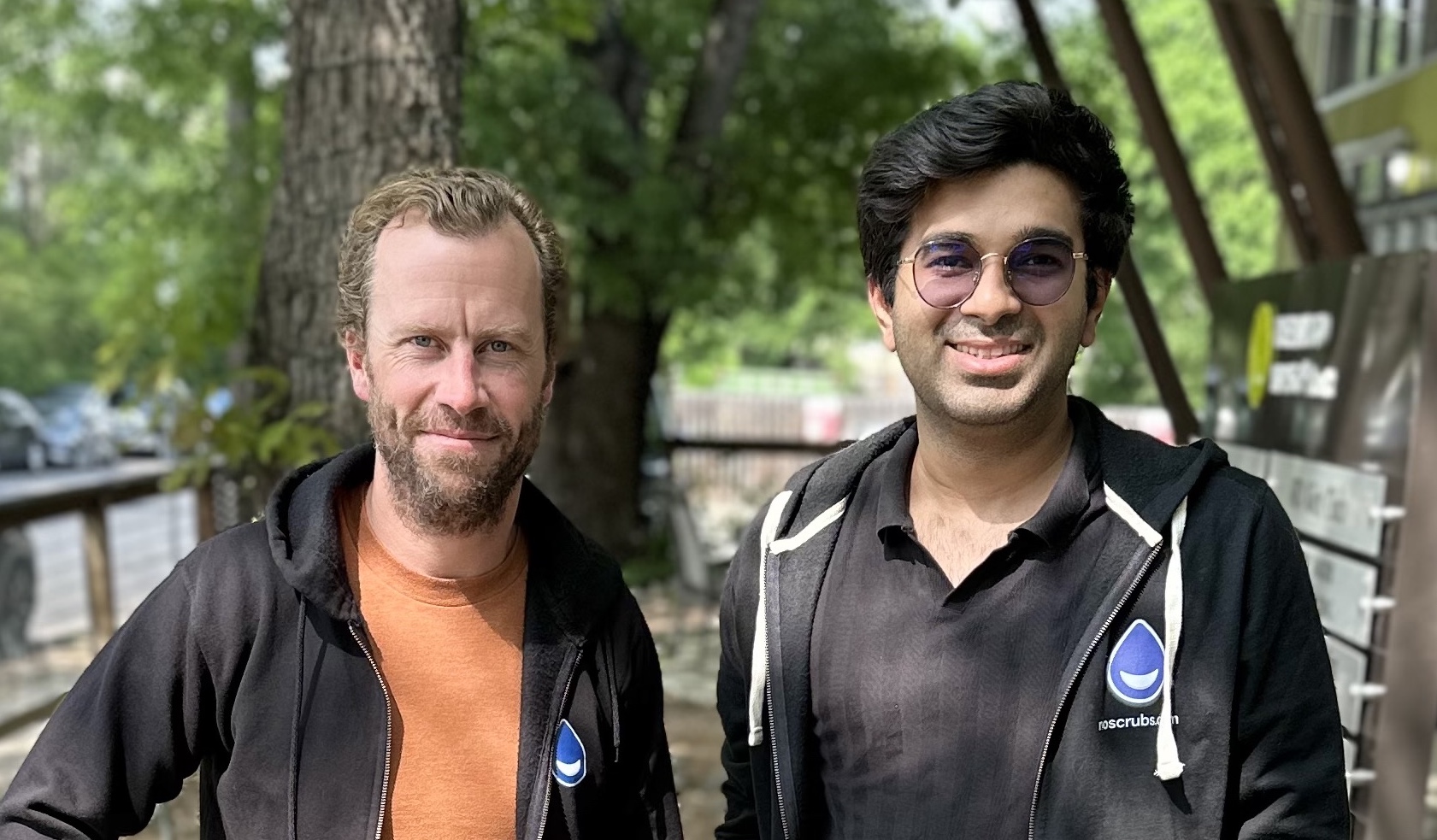
“There’s Instacart for groceries, DoorDash for food. Where is the laundry solution that is as fast as doing it yourself or better?” asks Matt O’Connor, co-founder and CEO of Texas-based NoScrubs, an upstart seeking to disrupt the clothes-cleaning business.
Having recently launched across Silicon Valley, NoScrubs aims to serve customers from San Jose to San Francisco, following rollouts in Los Angeles, Phoenix, Miami and Texas.
Wash-and-fold delivery services have operated in the Bay Area for years, including those that use software. NoScrubs is vying to differentiate itself through AI tools it says helps maintain quality standards (as an “order coach” for partner washing facilities it calls “scrubbers”).
Each scrubber gets an AI assistant that provides guidance on machine settings, garment care, folding standards and order verification. “For instance, if the scrubber has a machine setting that is different from what the customer requested, they’ll get an alert to correct that,” said O’Connor, who was the 20th employee at Instacart (and part of that company’s Austin expansion in 2014).
Plus, the company says its distributed model reduces delivery distances and processing times, “—just like with Instacart. They didn’t build their own grocery stores,” O’Connor said. “When a customer makes an order, it is shopped for at the nearest possible grocery store.”
NoScrubs vets wash facilities and subcontracts with third parties. “We onboard and educate the scrubber pool, who are equivalent to Instacart shoppers,” O’Connor said. “We build the pool that claims orders—when they’re available and want to work—and then they handle the process end-to-end.” Laundromats that partner with NoScrubs keep a percentage of the profits, he adds.
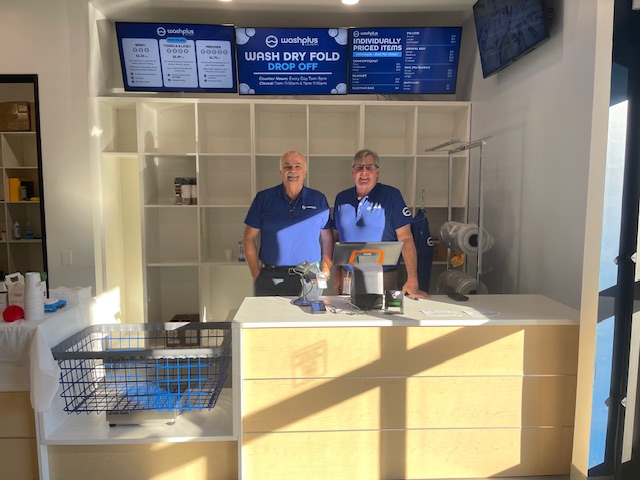
But some potential scrubbers are a little skeptical—such as Dimitri Bountouvas, who owns Wash Plus in Campbell with business partner Jeff Antrim.
“These people—or really, these companies—are technology companies that manage the orders, processing, payments and so forth, but they never physically touch the product,” said laundromat owner Bountouvas.
“The problem with that—and we are not leaning in that direction—is that the consumer doesn’t actually know who is doing their laundry. It goes to whoever decides to accept the order that this front-end company hires.”
Bountouvas said Wash Plus has been open five months now and is taking a more personal approach. In fact, he says they strive to make their location a socially-engaging space: “We like to consider ourselves the ‘Starbucks’ of laundromats,” said Bountouvas. “The environment is inviting; we have full time employees here all the time; it’s never self-serve empty.”
But Bountouvas agrees convenience apps could upend the business landscape in the same way they transformed product delivery—but only if customers come to trust them.
“We are living in a convenience society, where people are valuing their time versus their money,” said Bountouvas.
“If a service can pick up and deliver their laundry in a manner that’s trustworthy—because people are very personal about their laundry—if it’s processed and delivered back in a way that’s acceptable and in a pristine manner—especially in the San Francisco Bay Area—people will gravitate (that direction) more and more.”