

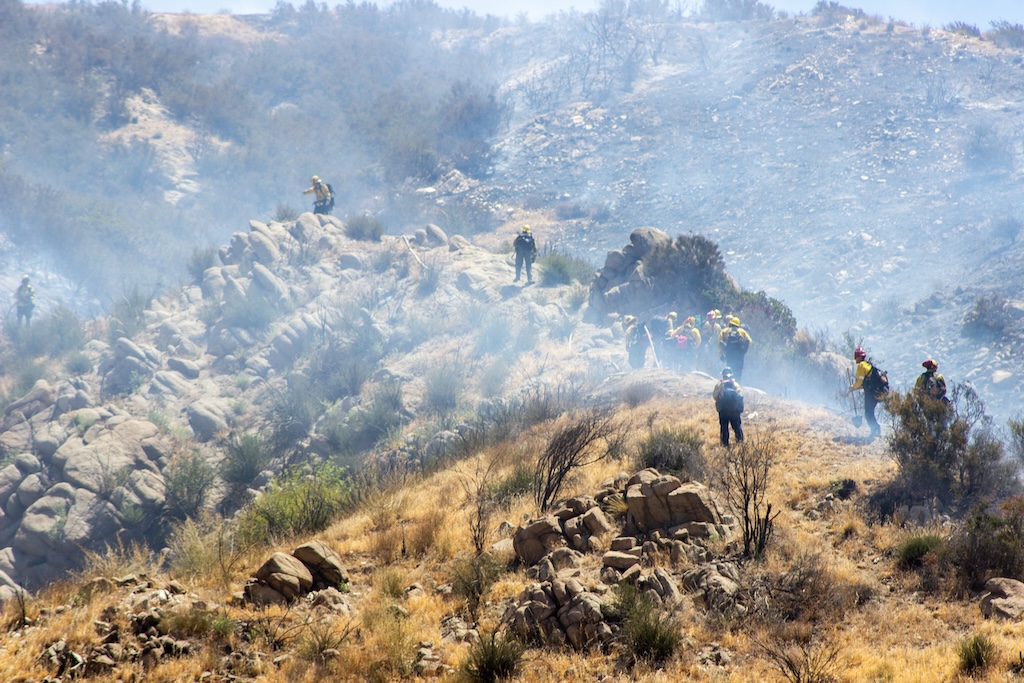
Gearing up every morning for a job built on danger just comes with being a firefighter. Yet for thousands who hold this job in the Bay Area, the greatest risk may come not from flames or collapsing walls, but from the gear meant to protect them. This is the reality of PFAS (polyfluoroalkyl substances—AKA “forever chemicals”): foams and turnout gear many firefighters use on every call can be just as fatal as a runaway wildfire.
PFAS took off because they seemed to be the secret ingredient in miracles. They repel water and oil, handle extreme heat and don’t break down easily. This makes them perfect for firefighting foam and protective garments. But that durability comes with a cost. PFAS stay in the body for years and build up over time. Research has even linked several to heightened cancer risk and immune system and hormonal problems. For firefighters who worked with PFAS foam and wore PFAS-treated gear daily, that slow buildup has created serious long-term health concerns.
California’s SB 1044 finally banned PFAS-based foam and pushed departments toward safer gear, removing two major exposure routes. But the risk isn’t gone. PFAS-free equipment is new, not universally adopted and still under scientific review. That’s why SB 700, now moving through the California Legislature, matters. It would fund research into firefighter cancer trends, PFAS detection and safer equipment design.
Some departments have already moved ahead. Santa Clara County Fire Department Capt. Jon Pittman shared that his agency fully switched to PFAS-free gear as soon as reliable models became available. “Fresh information lets us make informed changes that benefit both the public and our firefighters,” he said.
Firefighters face the most direct and immediate exposure, but the public shares the long-term risk. PFAS chemicals escape into creeks and groundwater, and seep into household items, threatening personal safety. The veto of SB 682, which had aimed to limit PFAS in everyday consumer products and strengthen chemical disclosure, leaves the community without wider safeguards against contamination.
Bay Area youth can play a real role in protecting statewide safety. Students are already driving local water-quality projects, pushing for clean-up funding and partnering with agencies to monitor streams. As PFAS research expands, there is a growing need for area youth to move this conversation forward: questioning, researching and advocating for clean water and safer working conditions for the firefighters who protect our communities. Capt. Pittman emphasized how essential student activism can be, noting, “The younger generation brings a fresh perspective that can lead to innovation and positive change in the fire service.” Youth voices are not just welcome, they are needed.
Protecting firefighters means protecting the communities they serve. As California weighs the future of PFAS regulation, stronger research, smarter policy and rising youth leadership offer a path toward safer gear, cleaner water and a healthier Bay Area for all.
(The article also appeared in our print / e-edition here: https://issuu.com/metrosiliconvalley/docs/los_gatan_december_3_2025/16)
Trisha Shivakumar is a high school junior at The Harker School who blends journalism, activism and research to spotlight water issues around the globe—and right here at home. As leader of the Water1st Bay Area Chapter, she helps local youth advocate for equitable water access.