
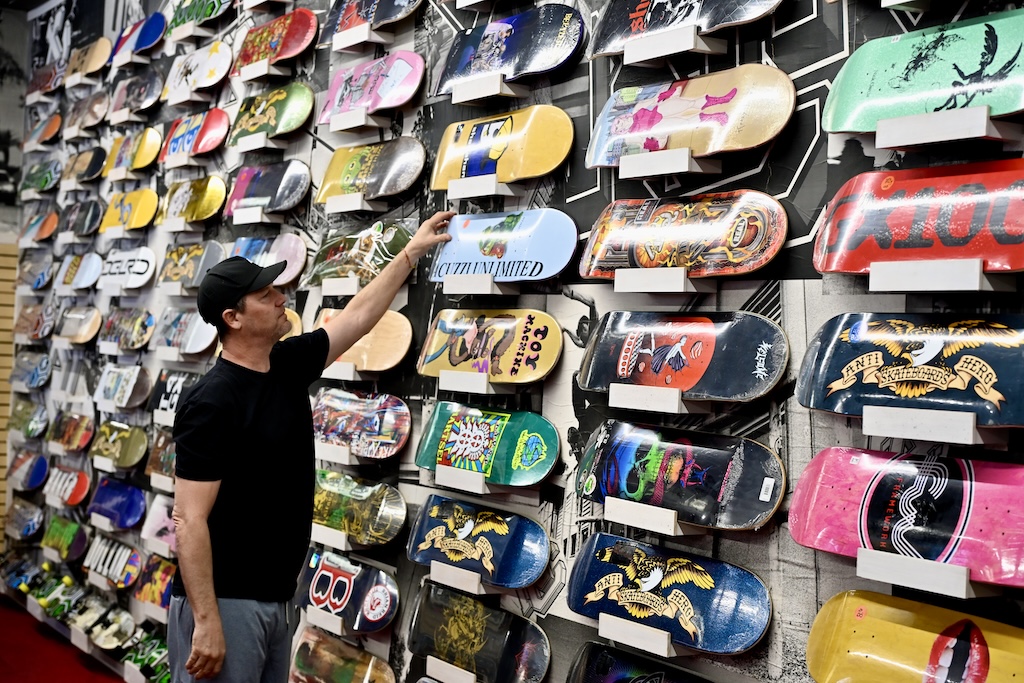
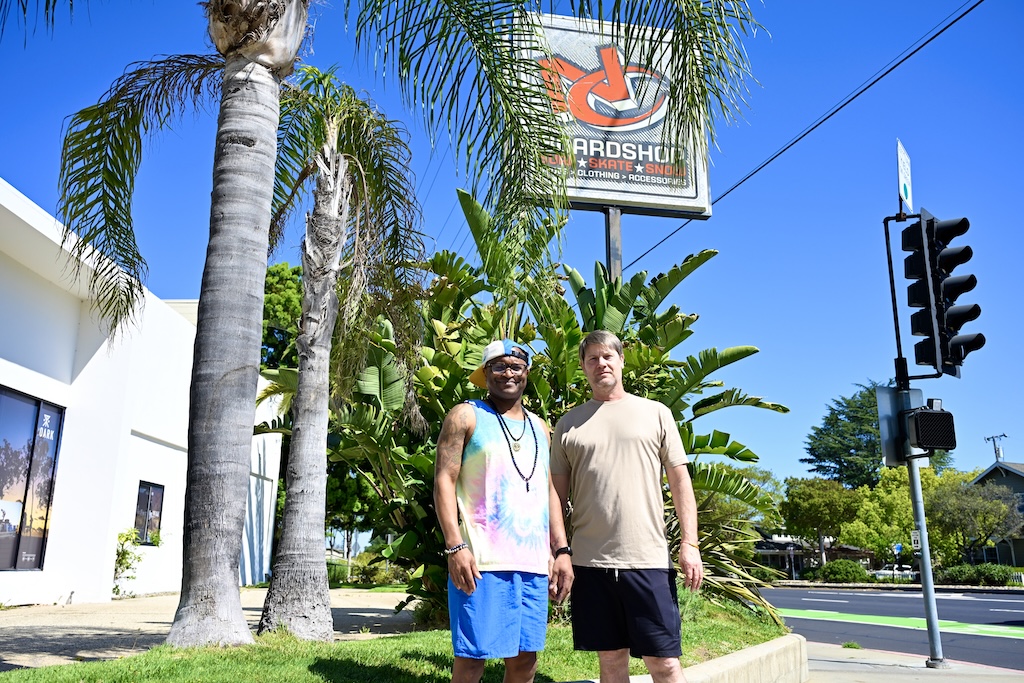
This year marks 40 years since NC Boardshop first landed in Los Gatos. They’ve moved four times since their doors first opened in 1986. Their current spot at 16203 Los Gatos Blvd. has been their longest lease to date, says co-owner Mike Allen.
They’re in the process of planning a big celebration for their anniversary—as, after all, staying afloat for 40 years would be a major accomplishment for any company.
But it’s a particularly big milestone for a skateboard retailer, given the industry was considered somewhat of a trend that could flare-out, back when they started.
Allen says, despite the successive waves of industry turbulence reaching the highest crest in the 1990s, NC has managed to find a way to continue existing—and thriving—thanks in part to the defiant nature of the target market they serve.
NC Boardshop was originally named No Control, before they went for the abbreviation.
Allen began skating in 1985.
“I just wanted to skate, skate, skate,” he said of his early years. “I had a job, and was doing schooling—and via osmosis just meeting people. Skaters back then just knew each other regardless of if they’d met beforehand.”
Allen moved from Florida in 1991 at the age of 18 and quickly found community, in part due to his passion for skateboarding.
He’s carried that niche part of his identity with him into his career.
These days, Allen acts almost like a father to a subculture that’s been surprisingly resilient here.
As Allen’s social circle grew, he met people who were sponsored. He eventually began helping out at a skate shop until he was employed.
Alex Vecchiet began NC Boardshop in 1986. Though now a commercial fisherman, he remains one of the co-owners.
The second location was at 145 N. Santa Cruz Ave. The next decade was at 442 N. Santa Cruz Ave., by where Starbucks and Aldo’s Restaurant are now.
NC has been along Los Gatos Boulevard for 26 years.
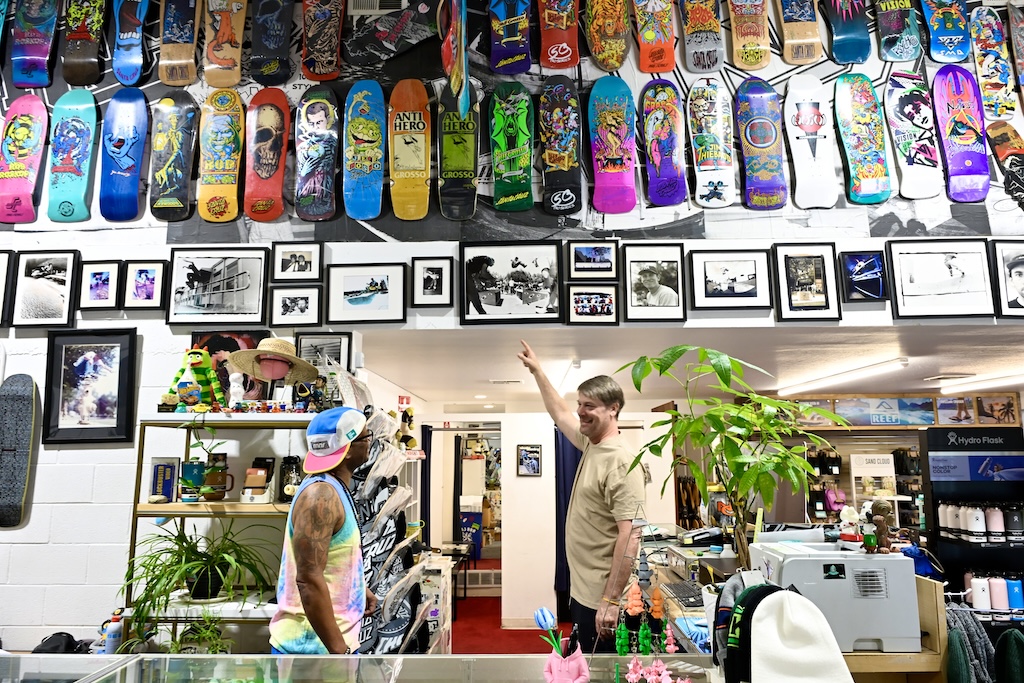
Skateboarding was fuelled by raw rebellion, where skaters would ride the ramps of a local library or mall. Though many found this troublesome, the sport’s prominence flourished in the cracks of society, as skaters eschewed the commercial world.
Allen says he has been approached more than once to be acquired by big companies. But he said no each time. Allen explains that NC was one of the first stores in the Bay Area to carry snowboards. Surfing on snow is no longer a novelty.
When the culture—and their business—were pumping on all cylinders in the 90s, investors would go around and look for shops like NC to scoop up.
“We never wanted to go that route,” Allen said. “It takes the heart and soul out of skating. We opted to stay small instead of selling out to that.”
Allen muses that he sometimes wishes he had taken that path, joking that he’d probably be retired already, driving a cooler car and living in a nicer house.
But this desire to stay small—and not explode—allowed NC to maintain its sense of self.
What does Allen think about the fact that Los Gatos has no skateparks? He reflects on how, in the 80s and 90s, skateboarding used to be very organic, with a legitimate countercultural ethos.
“To me, skate parks take all the skaters of the world and just corrall…them into this little micro environment,” he said. “It takes a lot of the artistry out of it. And that’s why we’re seeing a decline in skateboarding.”
But Allen also remembers being part of the drive to argue for the building of a skatepark—with the costs and benefits all laid out—which did not succeed.
“I don’t want there to be a skatepark in town, because I don’t want skateboards or scooter riders getting blamed for everything that happens in town,” he said. “I want to keep skating in a good light.”
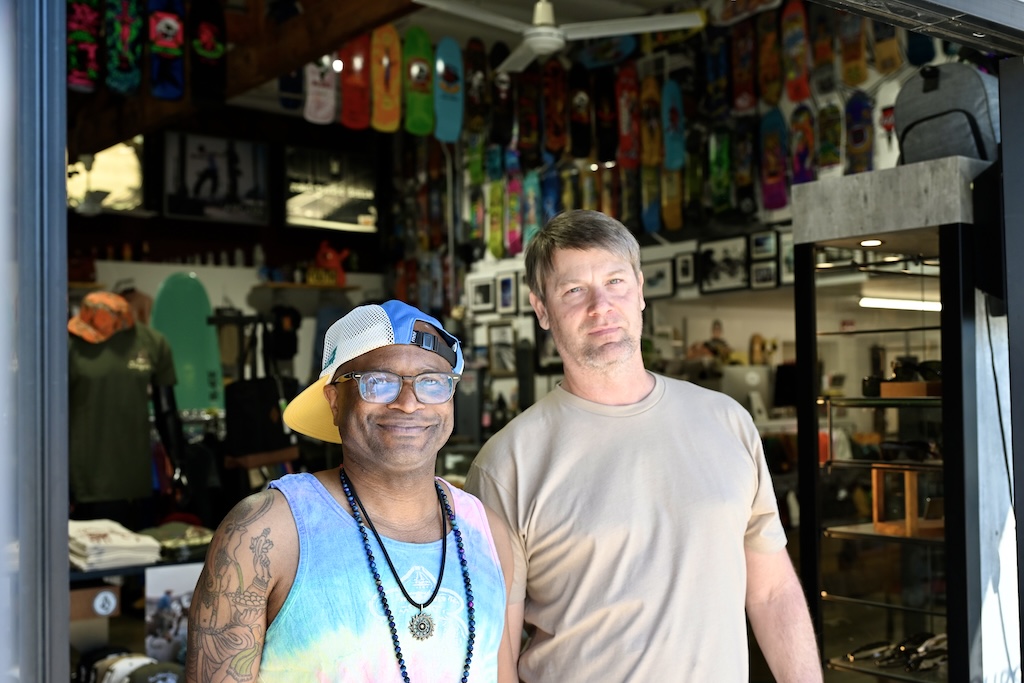
For Allen, skateboarding is about freedom. He wants to protect it from becoming a scapegoat.
However it seems in no danger of that on the global level.
The skateboarding business is anticipated to surpass $4 billion in value by 2030. And it’s now in the Olympics. But some argue the culture has taken a back seat.
According to Allen, skateboarding is at a commercial high since it’s gone to the Olympics and Having seen the undulations before, Allen’s speculates mainstream skate culture is bound to hit another rocky patch at some point, as it becomes more generic.
But as the corporate side faces strain, he says, skate culture is bound to return to its roots.
Preserving the heart and soul
Allen says that kids who grew up on NC are now coming in with their own youngsters.
“We’re more than just sales people to them, we’re part of that community,” he said.
Some of the biggest brand names that Allen carries are Roark, Viori, Santa Cruz Skateboards, Volcom, RVCA and Rhythm.
NC’s inventory caters not just to surfers or skaters, but people of all ages, from children to grandparents.
Allen knows that, historically at least, skate shops have had a stigma.
His goal is to create a retail environment where his own mother can walk in and be comfortable.
“The stigma is always going to be there,” he said. “And that’s why I try embracing everybody.”
Jimbo Phillips, of Santa Cruz, made the original No Control logo.
In the late 90s, NC developed their own skate team. They were pretty elite, with names like Jerry Hsu, Mark Johnson and Paul Sharp among them.
This helped to create a community and build brand recognition.
“There was the core team, and then the ethos and atmosphere of the community,” Allen said, adding the competitive landscape is something that’s grown-up with the newer generations of skaters.
Allen says NC has always tried to support athletes in any way that they can, from making videos that went world-wide, sending riders on trips or inspiring younger skateboarders to try their first ollie.
Their initial team of skaters have moved on, many with their own families and businesses.
But the passion remains.
“Skate culture is like a tight clique of friends that all explore and develop an industry together,” Allen said. “You all support each other, and are lifting each other up. It’s the unspoken bond of community.”
John Pryor, the manager of NC, has been best friends with Allen for over 20 years now.
“We’re like brothers,” he said. “My mom and I moved here from Illinois when I was in the fourth grade.”
Those were simpler times, growing up in the early 80s.
Modern day activities like doomscolling on smartphones weren’t a thing yet.
Pryor bmx-riding and skateboarding became the default after-school activities for Pryor.
He, too, found belonging in the skateboard counterculture—another outcast finding his tribe. Pryor says working at NC can feel less like a job and more like a way of life.
The skate world culture has changed quite a bit, he says. But, he adds, through it all, the local shops have remained like a “church” to the culture.
“The biggest issue is phones. I think that’s changing the kids,” he said. “Kids are always on their phones, even at the skateparks.”
So, in a town like Los Gatos keeping a business alive can be tough, how has NC been able to succeed for so long?
It’s stood the test of time by embracing the core—outside of society’s norms. And if they’ve proven one thing it’s this: there’s no controlling the heart of skateboard culture.