

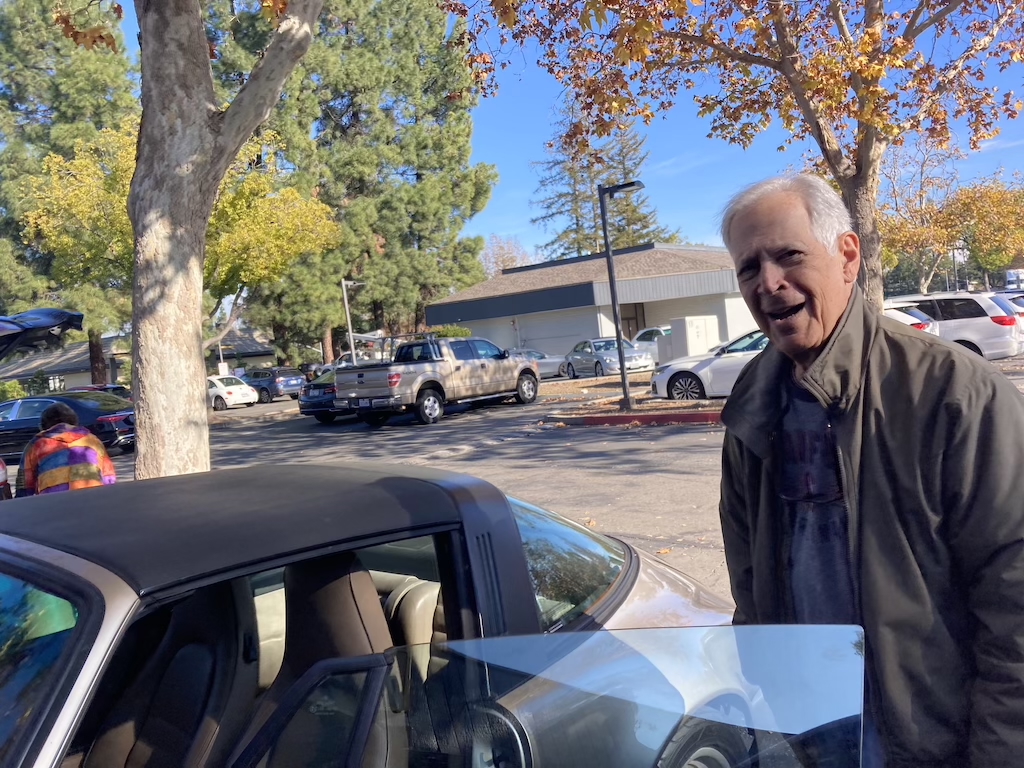
Lon Allan, 82, remembers the scrappy 1970s in Silicon Valley, when his client, future Video Game Hall of Famer Nolan Bushnell, hadn’t co-founded Atari yet.
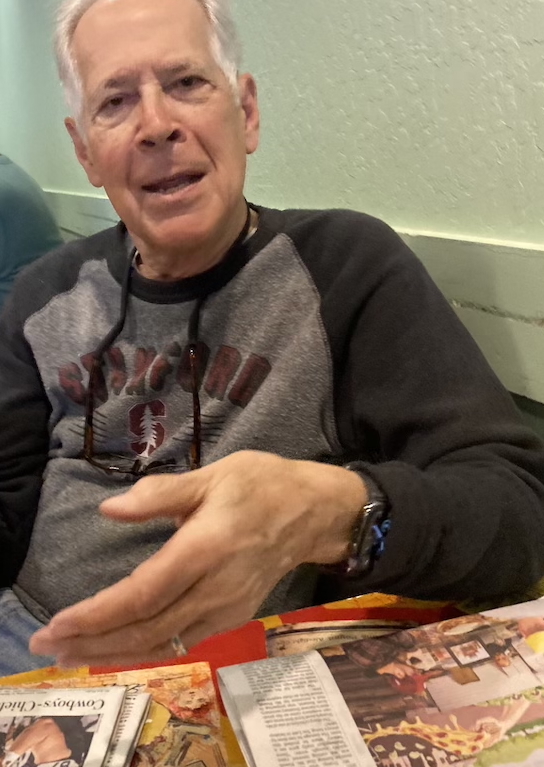
“He was the founder, I was his lawyer,” recalled Allan, the new mayor of Monte Sereno, during a recent interview at BLVD Coffee in Los Gatos. “Probably the most creative person I’ve ever represented—where most people see problems, Nolan saw opportunities.”
It’s Allan’s second time at the head of the small, wealthy enclave neighboring San Jose, Saratoga and Los Gatos, and to tackle rising challenges like unaffordability, wildfire risk, funding cutbacks, traffic and a variety of quality-of-life concerns—he’ll be dipping into the deep well of experience he’s replenished over the decades in different industries.
And that goes all the way back to that time he helped set up a little Los Gatos business called Atari.
“I incorporated Atari right here in Los Gatos, California. I filed the articles of incorporation in June 1972. Our world headquarters where we started was Winchester and Lark,” he said, adding back then they thought they didn’t need anyone over the age of 30 involved. “The truth is, we were full of ourselves.”
As green as he was, Allan would soon get the chance to fill out his resume, as he helped the company grow to more than 3,000 employees in Taipei, Taiwan by the mid-70s.
“That’s a heady experience,” he recalled, of the early life of Atari Taiwan Manufacturing Company, and how he also was involved in setting up Atari’s French operation.
Greek philosopher Heraclitus once mused on the constant march of time, and the little Los Gatos company (that burst onto the scene with “Pong”) was purchased by Warner Communications for $28 million in 1976.
As the new year dawns, another Los Gatos company, Netflix, is on the verge of acquiring Warner Brothers Discover for $82.7 billion (and fighting off the Ellison family’s hostile attempt to wrangle control).
In 1983, during the first big video game crash, the that industry was worth about $2.9 billion (down by a third from the prior peak). Nowadays, the figure has jumped to upwards of $400 billion, according to EBSCO Knowledge Advantage.
(Drew Penner / Los Gatan)
In contrast, the entire American newspaper market was worth $20.61 billion last year, according to Grand View Research, which notes The Wall Street Journal lost 21% of its print circulation since 2020.
But Allan is one of the stalwarts.
“I’ve had a subscription to the Wall Street Journal since 1961,” he said, explaining this dates back to advice from a political science professor in his freshman year of college, adding he also subscribes to the New York Times. “The professor said, ‘If you only learn one thing from me, learn to get in the good-newspaper habit.’”
He recently subscribed to the Los Gatan for home delivery.
Growing up in Detroit, Mich.—a year ahead of Diana Ross and the Supremes at Cass Technical High School—Allan saw the value of public television and radio. Much later in life, he’d join the boards of KTEH 54, which was bought by KQED, and KCAT, the local broadcaster run by the wife of the most recent Monte Sereno Council addition, Ken Toren.
He says he believes that hyperlocal media is a key part of keeping residents informed about what’s going on in their own backyard.
“The biggest problem we have in small city government is getting the word out to our residents, our constituents,” he said.
Another transformation Allan has had a front row seat to: the rise of China.
Back in his Atari era, as general counsel, Taiwan was the manufacturing center, while Hong Kong was the financial hub. You wanted chip boards stuffed at Asian salaries, not Silicon Valley salaries, he explained. And into the 1980s, neighboring China was trailing.
“It was clearly a Third World country,” he said, adding that’s changed incredibly over the decades. “Shanghai today is a cross between midtown Manhattan and Beverly Hills. I mean, it’s modern—and it’s skyscrapers…If it hasn’t already, it’s quickly replacing Hong Kong as the financial center of Asia.”
Allan taught in Shanghai at a graduate school of business in 1985.
The opportunity came about when Thomas Klitgaard, the general counsel at Tandem Computers—a founder of San Francisco-Shanghai Sister City Committee (the first such partnership between China and an American locale)—reached out.
Allan had been involved with a joint venture in 1983 that brought solar-powered weather stations to remote areas of China. “This was new stuff,” he said. “I flew of there with the president of the American company.”
Back then, people were still wearing the drab Mao suits.
“I was a rare bird,” he said.
The concept of paying taxes to the government—rather than existing on a stipend from the state—was a foreign concept to his overseas students.
He was paid, upon arrival, with eight hundred-dollar bills, for two weeks of teaching.
“They also paid for my wife to be there. That $800 did not leave China,” he said, thinking of the shopping he and his wife Mary, originally a Cleveland girl, did at the time. “Next month, young Mary and I are going to be 58 years. Now that is seriously married!”
He returned to China on business while general counsel for Custom Chrome, where he worked from 92-2002.
Allan was an outside director on the boards of companies like Catalyst Semiconductor, Inc., NetLogic Microsystems, Inc., Galvantech, Inc. and Global Motorsport Group, Inc. He’s served as chair of the board of the Silicon Valley chapter of the National Association of Corporate Directors and The Harker School, and was board president for Villa Montalvo.
He was on the faculty of the Arthur and Toni Rembe Rock Center for Corporate Governance at Stanford University from 2004-16, overlapping with his first mayoral stint, that final year.
The ivory tower role involved multiple guest lecturing gigs in East Asia.
(Drew Penner / Los Gatan)
During our interview, a spontaneous conversation erupted between Allan and a former NVIDIA manager sitting at the neighboring table. In an interaction that’s typical of Los Gatos coffee houses, the two seasoned tech industry knowledge workers briefly traded stories and debated the efficacy of the modern Chinese workforce.
At another point he received a call from former Republican State Assembly candidate Liz Lawler and told her he’d call her back. The two chat from time to time. She’s on the Monte Sereno Site and Architecture Commission and has most recently been working on Gus Mattammal’s campaign for state superintendent.
“He served on site and architecture with me for a bit,” Lawler said of Allan, who she says is easy to work with. “He’s got a lot of institutional knowledge, which is nice.
“He’s very easy to work with. He’s a talker. He’s got lots of great stories.”
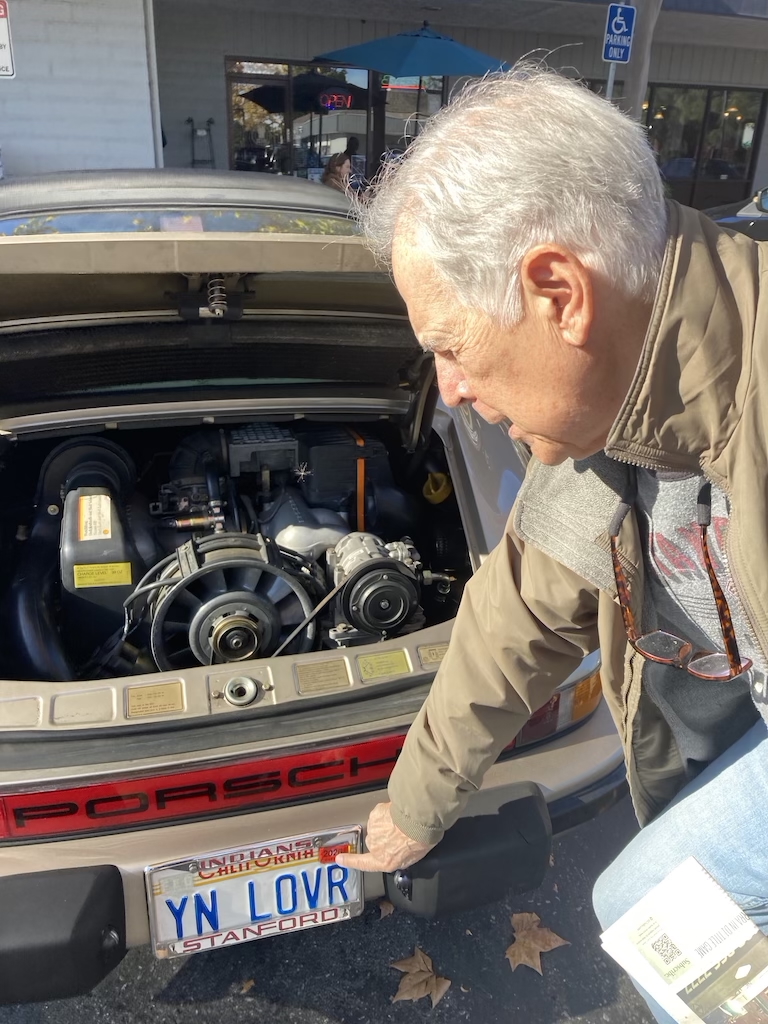
On Dec. 21, Allan hosted his fellow Council members and their loved ones at his home, including Jo-Anne Sinclair, the chief legal officer at business-to-business artificial intelligence company ASAPP, Inc. Allan likes to razz that Sinclair’s husband Councilmember Bryan Mekechuk’s Tesla Cybertruck doesn’t quite measure up to his classic brown Porsche that he bought in the mid-1980s, which he keeps in mint condition.
Los Gatan contributor Judy Peterson covered Allan’s last Council stint.
“Most people Lon’s age are enjoying retirement, but time and time again Lon has shown his dedication to Monte Sereno—stepping up to replace Council members who resigned on at least two occasions and offering advice/counsel on development controversies,” she said. “While not everyone may agree with his positions, he’s the kind of person who helps keep things ticking along—and Monte Sereno is fortunate to have him.”
Allan’s big new push: eucalyptus removal along Highway 9, a wildfire prevention measure which will require approval from Caltrans. State Assemblymember Gail Pellerin confirmed that she’s been in touch with Allan about the matter. They had another meeting scheduled to discuss the topic this week.