
Sasha Ryu, Contributor
This August, the Los Gatos Town Council came a step closer to meeting its state-mandated goal of creating 1,993 new housing units by 2031. Progress on two housing proposals drew mixed reactions from the public, with one receiving more support than the other.
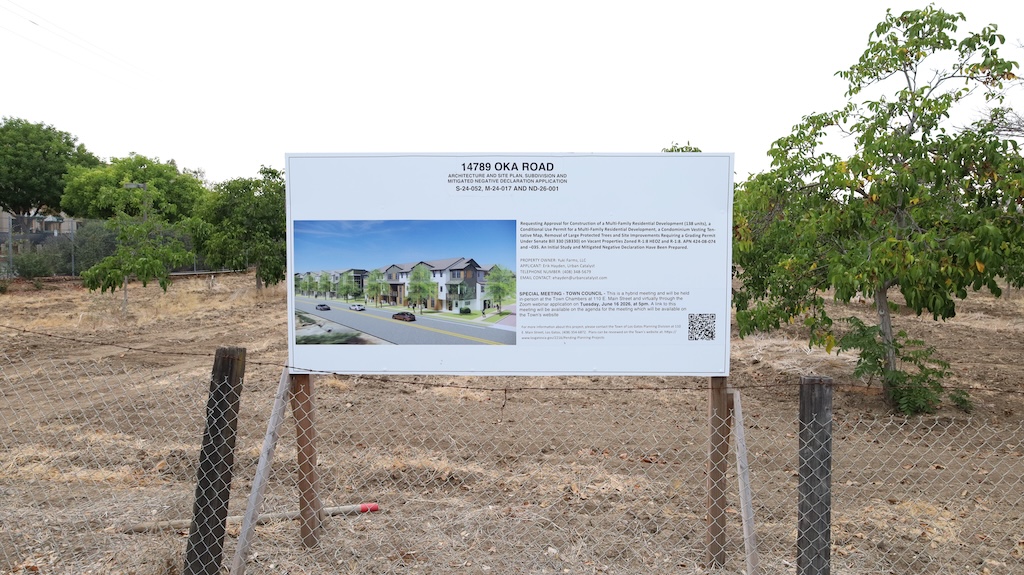
At a special meeting held Aug. 18, Council voted to approve the construction of a multi-family residential development at 14789 Oka Road by private equity real estate company Urban Catalyst. The firm will build 138 three-story townhomes on the 6.71-acre walnut orchard neighboring the Addison-Penzak Jewish Community Center. Of the 138 homes, 28 will be designated as housing for low-income families.
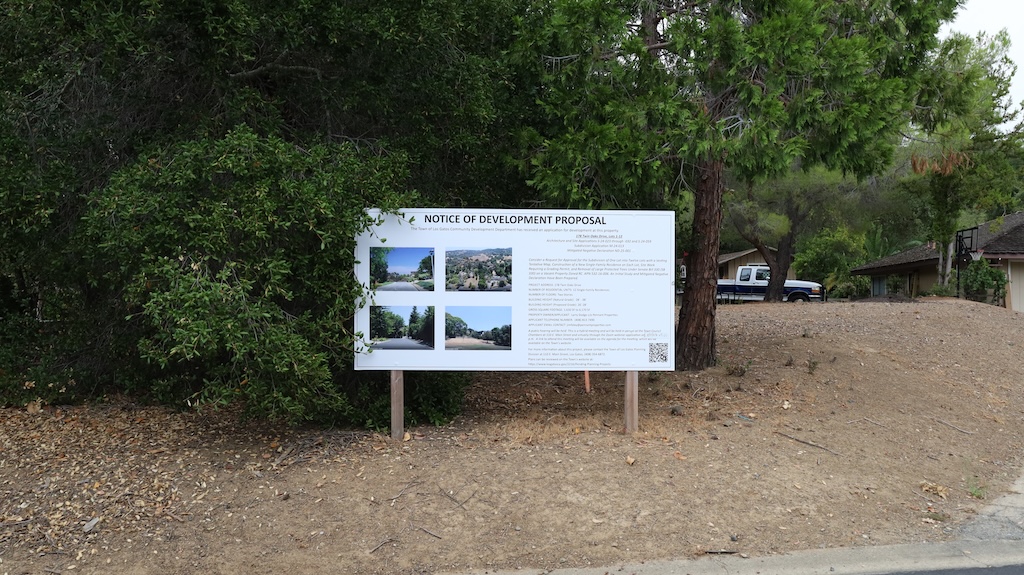
On Aug. 11, Council held a special meeting to discuss the Surrey Farms Estates Subdivision Project, a proposal by Pennant Properties to construct 12 single-family residences at 178 Twin Oaks Dr. Of the 12 units, three would be designated as affordable housing. After residents raised concerns about the development, including about its environmental impact, Council voted to revisit the proposal in October.
By designating at least 20 percent of their units as affordable housing for low-income families, both developers have been able to leverage Builder’s Remedy provisions under the State’s Housing Accountability Act. Under these HAA regulations, the Town is prohibited from rejecting the developer’s proposals, reducing the density of their developments or imposing restrictions that would make the project infeasible.
Under the California State Density Bonus Law, developers have also been able to seek unlimited waivers of any development standards that they would believe to have the effect of “physically precluding” their developments as proposed. This has made it particularly difficult for the Town to successfully make any changes to the projects.
Vice Mayor Maria Ristow commented on the limitations created by the new California laws at both special Town Council meetings.
“I think the Planning Commission did a great job working through some of the details, trying to get some concessions,” Ristow said of the Oka Road development on Aug. 18. “State law is not on our side there.”
Despite her concerns, the vice mayor said she was still excited about the project bringing more affordable housing to Los Gatos.
“This site was not identified for this level of density. The Builder’s Remedy allows this,” Ristow said. “On the other hand…we’re getting (below-market-rate units) in numbers we didn’t plan for this site, and that is game-changing.”
(Sasha Ryu / Los Gatan)
Ristow also highlighted that the term “affordable housing” is not abstract—the designated units at both Oka Road and Twin Oaks Drive must be affordable to people who make 80 percent or below the area’s median income. In this context, “affordable” translates to about 30% of that demographic’s income.
Other locals at the relatively short Aug. 18 meeting voiced similar opinions, expressing their support for building homes that young people and new families would be able to afford.
“We all know affordability is getting worse every year, and I think it’s imperative that we take a pro-housing stance for our current and future generations,” said Los Gatos resident Eric Brown. “I’ve heard about other projects…utilizing Builder’s Remedy (for) high rises and other ideas. By contrast, this seems like a model project for affordable housing.”
Residents attending the special meeting Aug. 11 did not have the same positive outlook regarding the proposed development at 178 Twin Oaks Dr. Nearly every person who provided public comment at the nearly four-and-a-half hour-long meeting voiced their opposition to the project.
Many residents were particularly upset with the Town environmental consultant’s determination to conduct a Mitigated Negative Declaration rather than an Environmental Impact Report. Under the California Environmental Quality Act, a MND is considered appropriate when any significant environmental impacts of a development could be mitigated to less than significance; an EIR is a comprehensive, rigorous study required when a project may cause significant environmental impacts that cannot be reduced to less-than-significant levels.
The proposed development would be built on land that’s been designated as a Resource Conservation Space since 1975 and would result in the removal of 223 protected trees. The June 2025 Fire Hazard Severity Zones Map also indicates the land is within a High Fire Hazard Zone.
The San Francisco Bay Regional Water Quality Control Board sent the Town four letters expressing additional concerns about the development. In their most recent letter on April 26, the Board stated that, “the mitigation measures in the (latest Surrey Farms Estates Subdivision Project Initial Study / Mitigated Negative Declaration) fail to establish that the Project’s impacts to waters of the State can be mitigated to a less than significant level.”
Many residents cited these issues and more as reasons to conduct a full EIR, seemingly in hopes it would result in a different conclusion than the MND. However, the Town’s environmental consultant said an EIR would be unlikely to force a change in the project.
“We wouldn’t really perform any additional technical analysis. That’s been done,” said Nick Pappani, the vice president of Sacramento-based Raney Planning & Management. “So, I do feel that there’s somewhat of a misunderstanding of what that EIR would bring, because we would basically be repackaging the information already in the MND and putting it in the form of an environmental impact report.”
Pappani and Town officials also pointed out that the firm already voluntarily conducted an EIR in 2017 and came to the same conclusion as the current MND—that any significant environmental impacts of the development could be mitigated to less than significance. That 2017 EIR, however, was never certified by the Town Council.
After discussing the Town’s limited ability to address resident concerns about the development, Councilmember Matthew Hudes made a motion which, among other things, called to schedule another special meeting to continue the discussion in October. It also asked for further research on “any potential issues regarding substantial evidence of fair argument, particularly regarding evidence that there is evidence in the record that would require an EIR versus an MND.”