

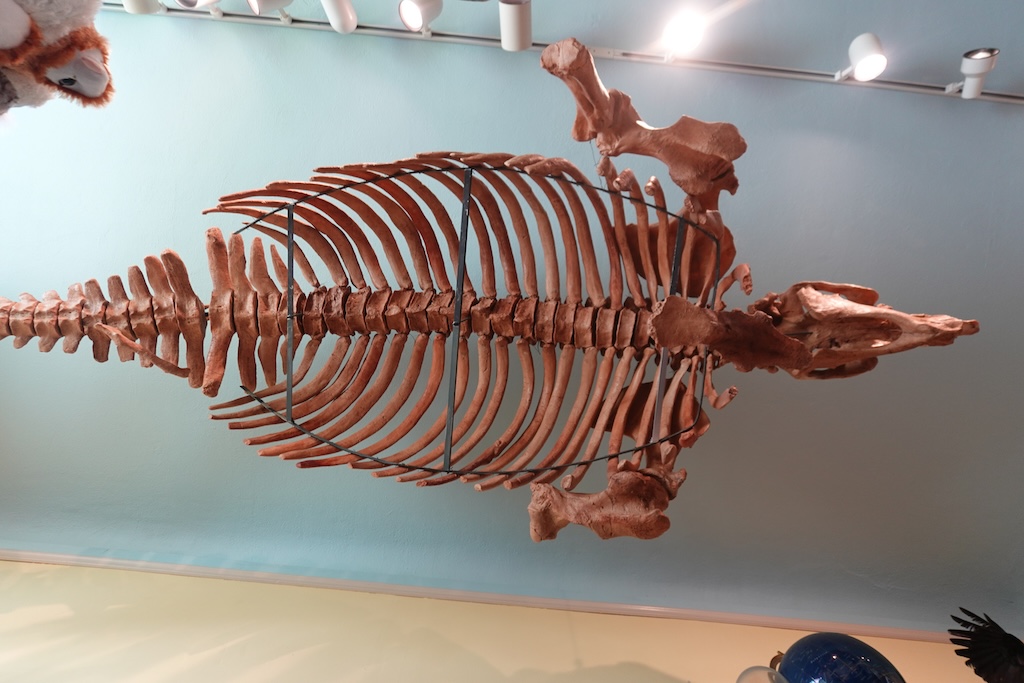
The history of the Santa Cruz Mountains is still underneath the soil of the redwoods—until it gets dug out. Millions of years ago, the region was submerged in water, leaving leftovers of marine sediment to molt into the sandstone and limestone we have today. Since then, the ground we stand on has included storylines about mammoths, native histories and industrial revolution. Every so often we are reminded of those narratives, like when a Californian stumbles on a paleontological item.
For a treasure hunter to know what to look for, one has to know the geology first. One side of the winding roads of Highway 9, the Santa Cruz Mountains is composed of fickle sandstone, while the north Ben Lomond Mountains, is largely limestone. Running inside the range, the San Lorenzo River supplies drinking water and a history of industrialization. The thread between prehistoric pasts and contemporary accounts rely on this geography.
Here are seven stops for fossil hunters, history buffs and visitors to explore to come to a more complete understanding of the Santa Cruz Mountains.
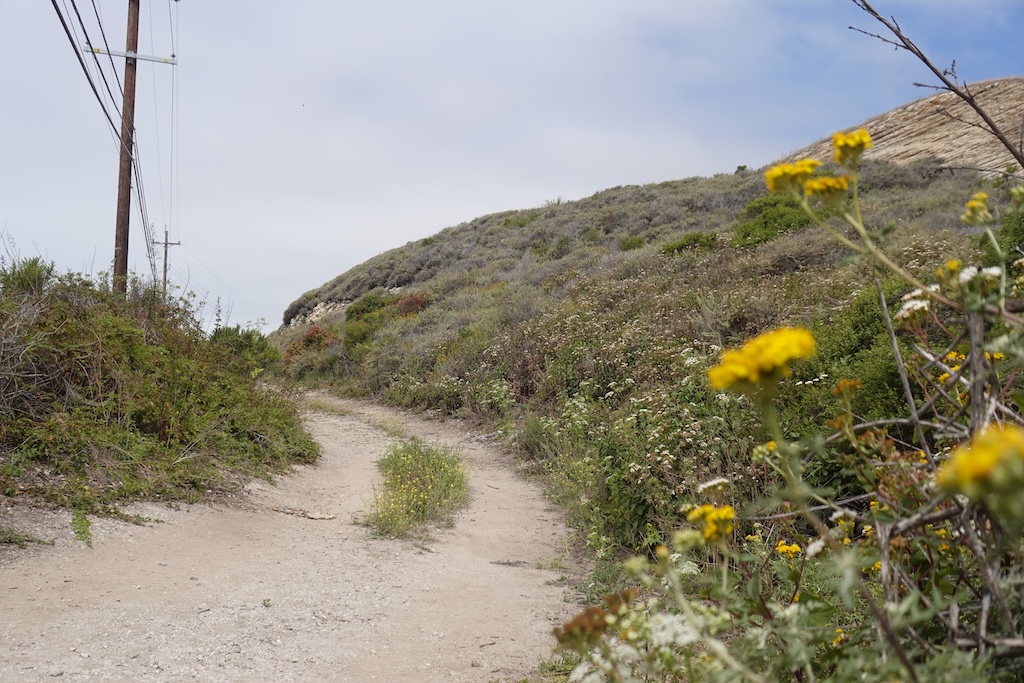
- The San Lorenzo River
Twenty-nine miles long and integral to the environment of the region, the San Lorenzo River has a complicated history.
Local historian Linda Ulbrich worked on digitalizing Santa Cruz history, understands the importance of the San Lorenzo River Valley over modern history better than most.
“The geography around the river is changing so much, it’s been really impactful,” said Ulbrich in a morning phone call, referring to a local history of floods over the last century and a half.
To Ulbrich, that history cannot be discussed without mentioning the floods. “Since the 1860s, there was this period of 10 decades of 18 floods that each one really worked to change the geography of the San Lorenzo River—especially its mouth, where it empties into the Monterey Bay,” she said. The Christmas Flood of 1955 was so impactful that it leveled Santa Cruz’ Chinatown, leaving streets submerged in eight feet of water.
President of the Board of Directors of the San Lorenzo Valley Museum Lisa Robinson told the Los Gatan, “One of the things that’s very interesting about this area is it’s driven by the resources, and they’re actually very unstable resources.” Robinson explained that the sandstone ground we walk on is soft, making landslides common. And yet, booming industries still arose around the San Lorenzo River such as lime, powder, leather and gold—with the big winding river an important fixture through it all.
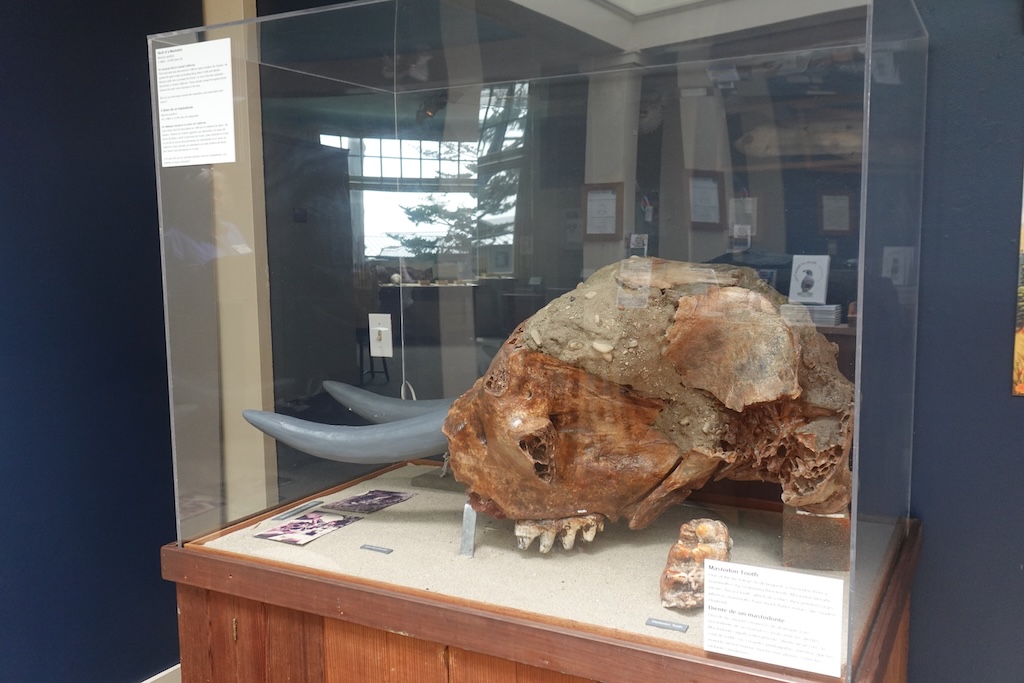
- The Mastodon Skull, Santa Cruz Natural History Museum
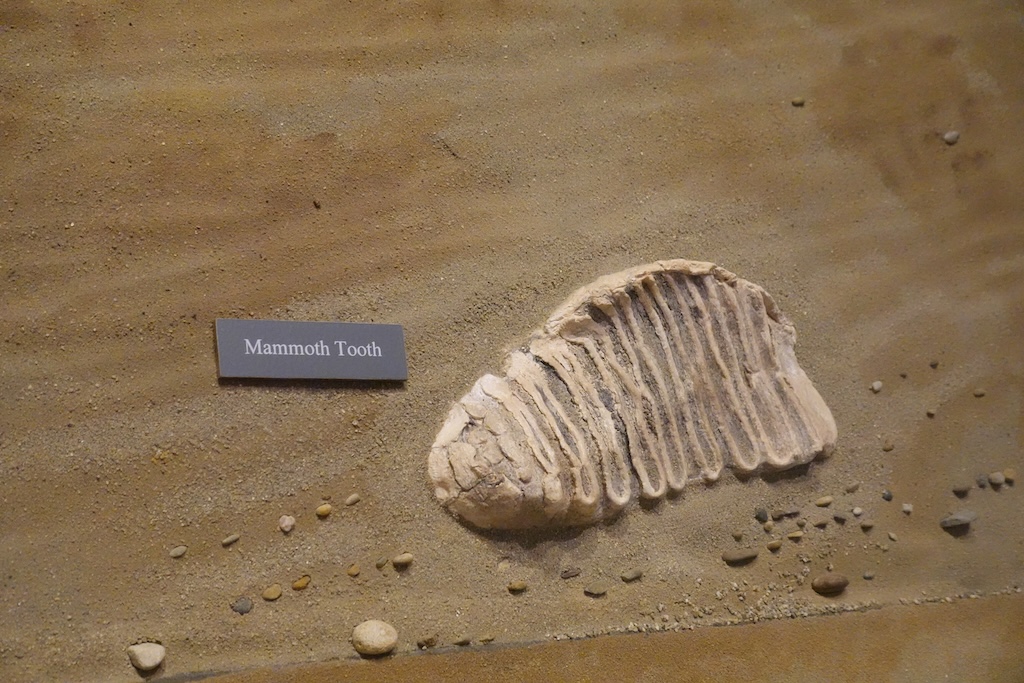
While fossils of sea life are not that uncommon in the area, there have been some startling discoveries; such as a mastodon molar found on Rio Del Mar State Beach, and a sloth fossil uncovered on the Santa Cruz Coastal Rail Trail. In 2025, the Santa Cruz Natural History Museum released information regarding a tooth from a Columbian mammoth from the Pleistocene. Collections Manager Kathleen Aston pointed to geological stretches like the Purisima Formation along the coast of Santa Cruz as home to a plethora of invertebrate and marine mammal fossils.
In the front foyer of the Natural History Museum in Santa Cruz sits the 1980 discovery of the juvenile skull of the mastodon, sans tusks. In 2023, the glass case it was in got some company, as a mastodon tooth was found in the sand in Aptos Creek. Thanks to carbon dating, researchers estimate the tooth to be from around 11,974 BCE and the skull from around 11,320 BCE.
- Jefferson’s Ground Sloth, Santa Cruz Natural History Museum
Well, prehistoric sloth arm. A fossilized left radius at least 11,000 years old was uncovered by a young group of students on a trip to the Santa Cruz mountains. Now, the remains of the sloth sit in the Santa Cruz Natural History Museum. According to the museum, this served as primary evidence that this species existed in the California redwoods. Placed next to the Mastodon in the coastal museum, this has joined the other artifacts from the Pleistocene.
(Obadiah Casperson / Los Gatan)
- The Logging Arch, San Lorenzo Valley Museum
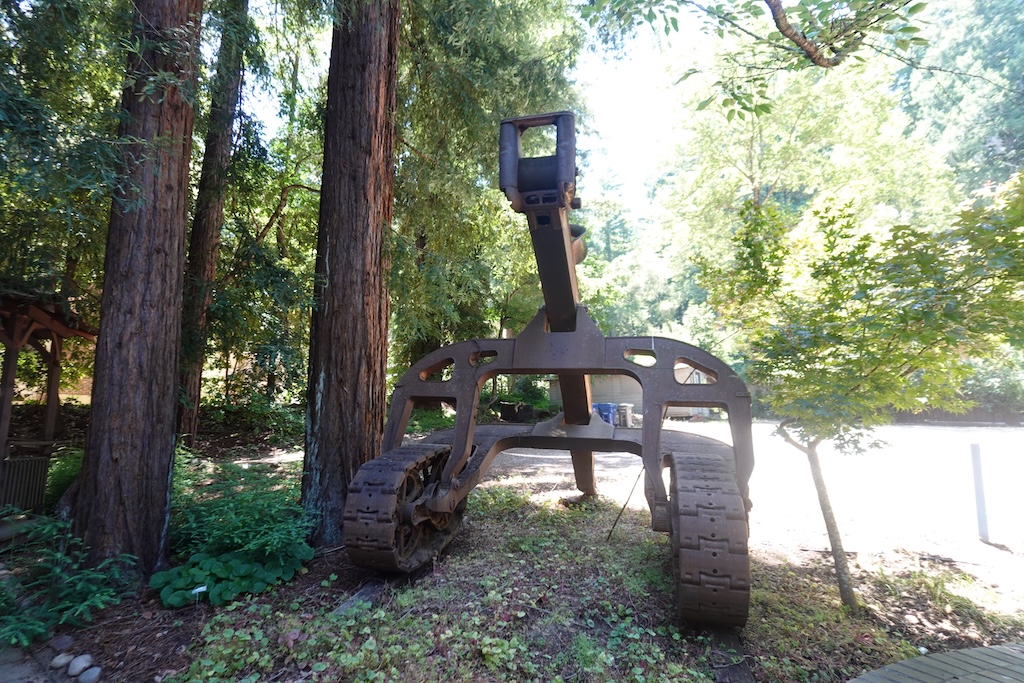
Moving into industrial history, this next relic is nestled in the Santa Cruz Mountains. For a region enveloped by redwoods, the history of logging and the grand lumber mill is well-worn territory. What is quite remarkable, however, is finding a 1930s-era track-laid logging arch in the overgrowth.
The San Lorenzo Valley Museum welcomed just such a large metal object in 2024, after a team pulled it out of the woods. Now it sits as a welcome mat to the museum, alongside a steam donkey recovered the year prior. Brought to the Boulder Creek Historical Society that sits right behind the museum, the new lawn decor adequately prepares visitors of the history inside the museum. Did someone say lumber?
The Santa Cruz Mountains carry quite an impressive industrial history built with railroads, and while the remnants of the steel lines are largely gone, every now and then a piece of that legacy is found. You can see the railroading history of the mountains and the logging arch at the San Lorenzo Valley Museum, located at 12547 Highway 9, in Boulder Creek.
- Collections Lab at New Museum Los Gatos
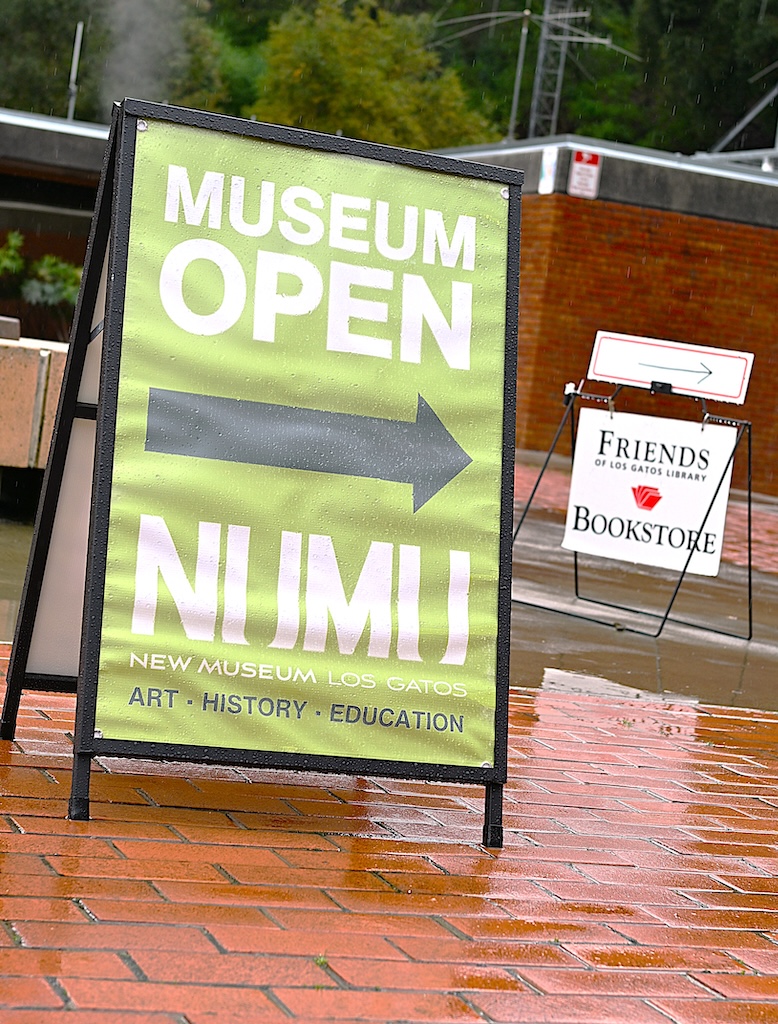
Do you want to look at local art while also learning about natural history? The New Museum in Los Gatos has both. Executive Director of the museum, Kimberly Snyder, told the Los Gatan that the institution widened its scope to include art after having “started as a natural history museum.”
“We have about 3,700 (historic) items online, and we have about 14,000 (historic items)—that’s estimated. It’s an educational opportunity,” said Snyder. As part of the Los Gatos History Project, this interactive collection is open Friday-Sunday for visitors (and Los Gatos residents free of charge) to take a closer look at the history of the town and the surrounding area. Alongside pull-out shelving with photos from the railroad and industrial days, the basement gallery also has information about Indigenous peoples.
“Los Gatos was founded in 1887. It has, you know, historical roots before that,” Snyder said. “It was a lot of Indigenous communities, and the many things that were here went back to the land,” said Snyder. This “back to the land” element is a common thread pulled on by historians across the region. Many historic landmarks—like the massive water flume in Boulder Creek—have dissipated over the years.
To learn more, each month the museum hosts events and seminars with speakers of local history. Read Jeffrey Blum’s take on NUMU’s 2026 ArtNow student art exhibit.
- The Holy City, Lexington Hills
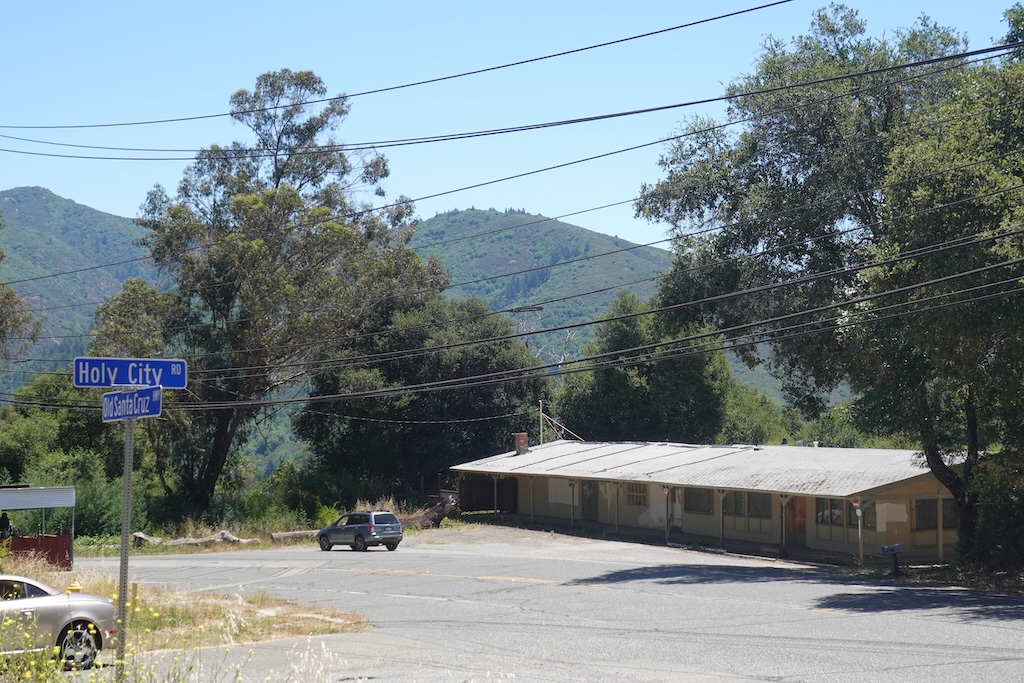
While not paleontological, a contemporary archaeological relic is that of a cult ghost town. The Holy City compound was built in 1919 by William Riker, a notorious antisemetic colony leader of the Perfect Christian Divine Way. In a land once roamed by mastodons and giant sloths, Riker created a tourist stop in the hills between Santa Cruz and San Jose, supposedly to pull passersbies into white supremacist ideology. Ultimately, the site was abandoned following Riker’s arrest for sedition in 1942.
Abandoned buildings and remnants sit off Highway 17, some of it nearly indistinguishable. Next time you drive over the hill, keep your eyes peeled for hints of the Santa Cruz cult.
(Obadiah Casperson / Los Gatan)
- The Lost World, Scotts Valley
The Lost World dinosaur park in Scotts Valley closed in the 1970s following the financial hardship—then death—of its founder. The land once housed paper maché dinosaurs in a garden lined with oddly interweaving grafted trees that made up what was originally called the Tree Circus. These trees were moved to Gilroy Gardens where you can still check them out.
The former Lost World amusement park at 4654 Scotts Valley Dr. is now commercial land. But if you look close enough, a few trees bent in unique patterns are still around the property.
The winding roads canopied by redwoods rest on top of sediment that have hosted millions of years of both natural and human history. Paleontological, historical and archaeological, the region is richer than the surface layer. So, the next time you traverse the summit, look closer at the rolling hills, new developments and natural areas through your car window.
That sandstone fragment that catches your eye may have once belonged to a mammoth.