
In February 1979, the Shah of Iran was overthrown by the Iranian Revolution, which installed Islamic leader Ayatollah Ruhollah Khomeini, leading many Persians to migrate outside of their homeland.
The largest subculture of Persians outside of Iran is in Los Angeles, but the Bay Area has a high concentration, too.
With the latest protests and the potential for another revolution happening in Iran now, the Los Gatan reached out to local Persian business owners to get their take on the situation.
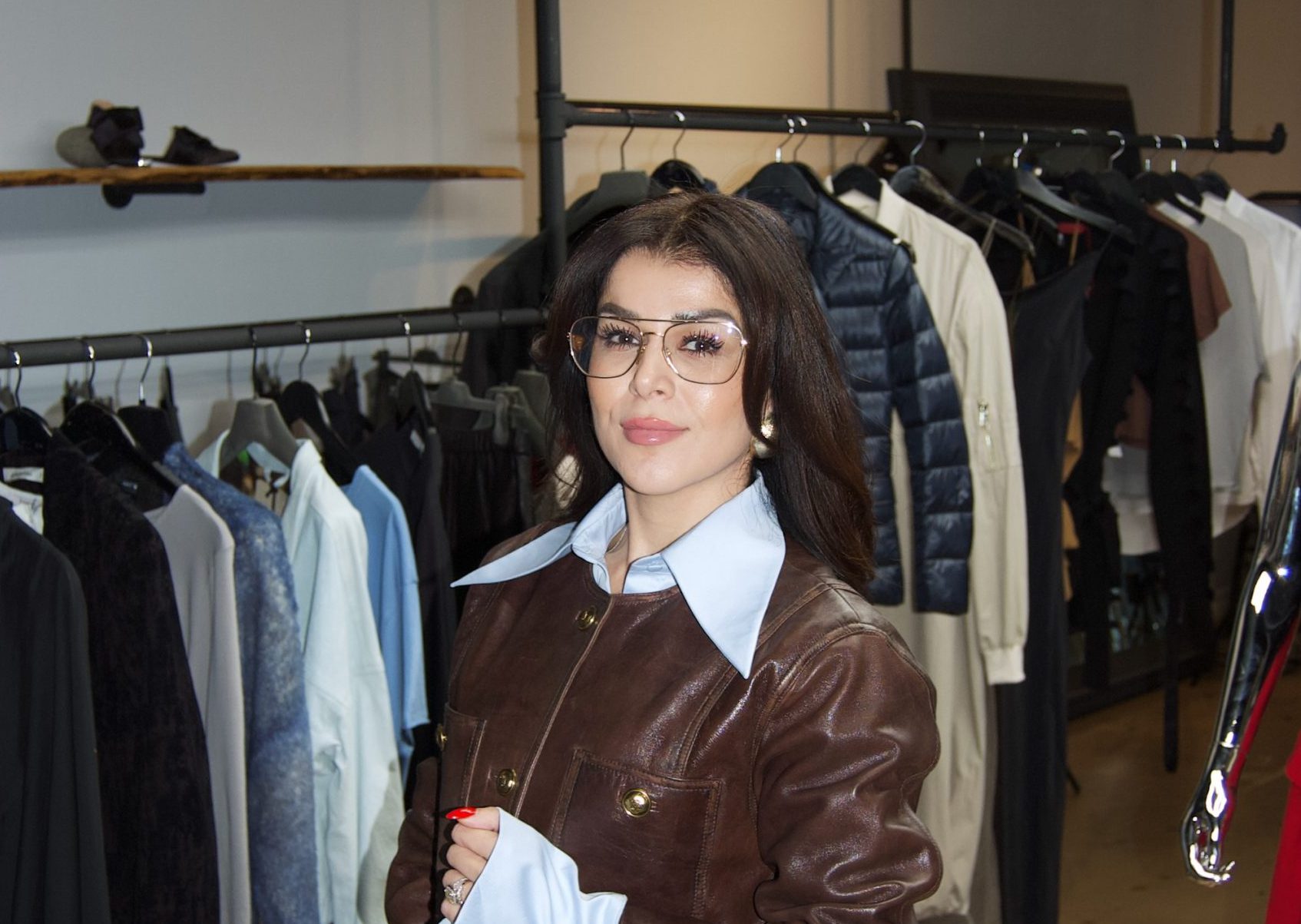
In 2008, Melody Derakshandeh moved to America from the Netherlands, after her family migrated there from Iran. With a rich love for fashion, Derakshandeh long had an affinity for opening her own store.
And last month, that dream became a reality. She’s now the owner of clothing boutique Manaz on Main Street.
“Manaz was an existing business for 26 years and she was ready to retire,” she said.
Derakshandeh was a customer of Manaz who became an acquaintance of the prior owner.
She recalled how she grew up in Europe—and shared how the thought of going into the small-business world came about.
“I ended up in law school,” she said. “And I was so ready to retire (from) the corporate world”.
Melody’s husband, Daryoush Derakshandeh, says that she’s always been one of those people who gets stopped by folks on the street who want to ask her about clothing.
Melody comments that her love for fashion has always been in her blood.
“I just picked my mom up from the airport and I said, ‘Mom, I’ve always loved fashion.’ She said, ‘You did. Like, from the age of three and four,’ I used to go dress up and just be in the mirror and just, like, match shoes.”
Being raised by Persian parents, Derakshandeh says she always wanted to have a higher education which led her to receive her law degree.
She remembers that they weren’t always so supportive about her going into the fashion world.
Manaz, she says she has plans to change the name of the store to Melodie.
Derakshandeh plans to keep some of the same inventory, but adds she’ll travel overseas to bring in much more, especially from Milan, Italy.
She hopes that will allow her to carry forward the strong legacy left by the prior owner.
Derakshandeh says Los Gatos has a sizable Persian community here.
‘I just want their voice to be heard’
—Melody Derakshandeh
“To start, I’m very heartbroken what’s going on in Iran; we haven’t heard from our families and friends for over days,” she said, noting the internet was shut down by the government there. “I just want their voice to be heard. I want the international community to step in and help Iran. I want us to help Iran, and we just want Iran voices to be heard internationally, and be free…So they could come here; you could go there. Like normal relations.”
Daryoush, Masood’s father, left Iran in 1984.
“I was in the military in army aviation—I’m a pilot,” he said. “And I had a problem with the system. All of my experience was about the flight, and teaching the flight also.”
He felt like the Islamic regime wanted to “destroy” the country, so he emigrated, he added.
“I did not want to follow them, and they wanted to get rid of me,” he said.
“I left the country.”
Petals Creamery
Another new Persian business owner in town is Nathan Gaudreau.
He co-owns the ice cream shop Petals Creamery in the heart of downtown, which opened last year.
Gaudreau says the first six months since opening have been overwhelmingly positive.
It took nearly two-and-a-half years to open the business due to the fallout from the Covid era, the need to get permits and await the arrival of equipment from Italy.
Most of the food and beverages sold in their shop are on the sweet side.
But recently, they integrated savory items such as “Noon Panir Sabzi,” which is a feta cheese and bread dish, which comes with greens, walnuts and sour cherry, and is recognized as a classic Persian appetizer (though some like it as a full meal).
They’re planning more such items this coming year such as “Salad Olivieh,” another Persian hallmark.
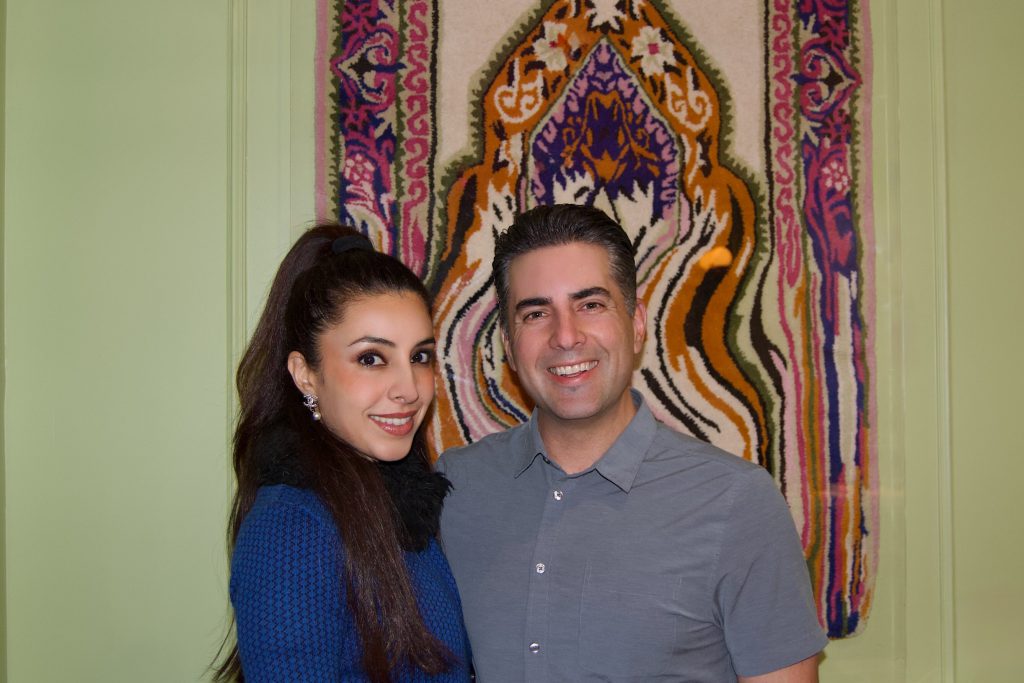
He is half Persian. His wife Parya—who’s worked as an optometrist at Site for Sore Eyes, a few stores down, for the last 13 years—is full Persian.
Both grew up in America.
When she was younger, Parya would go to Iran each summer to visit family.
“My heart is with the people of Iran, for sure,” she said. “We have family there, both in Tehran and Mashhad, and I went there many times as a child. I traveled there almost every summer up until probably I turned 18. So for me, I’ve been waiting for the people to have what they deserve, which is freedom.”
“Is that a lot to ask for?”
They’ve spoken with lawyers to see if they can visit Iran with their kids one day, though the hoops involved make it close to impossible.
Parya says part of the process is the request for husband Nathan to convert his religious beliefs to Islam, in order to be granted entry.
In Sunnyvale
Arman Rahbar works at Chelokababi Persian Cuisine in Sunnyvale full-time and is the grandson of the original owners.
On their menu is Chelo Kabab, which consists of grilled lamb or beef skewers, saffron-flavored rice with a side of tomato, raw onion and fresh greens.
Passed down three generations—initially from husband and wife Mohammad and Ashraf Rahbar—the restaurant is currently run by their children and grandchildren
They opened in 1979, at the time of the Iranian Revolution.
The Rahbar family was notified by a friend that there was a falafel shop for sale, and they thought it could be a good spot for a restaurant.
“My grandparents purchased the falafel place and got a minimal amount of customers,” Arman Rahbar says. “One day, my grandmother made food in the back, and customers asked what the food was. And she told them it was her food she cooked for herself. And the guest said, ‘That looks better than the stuff you guys are serving,’”
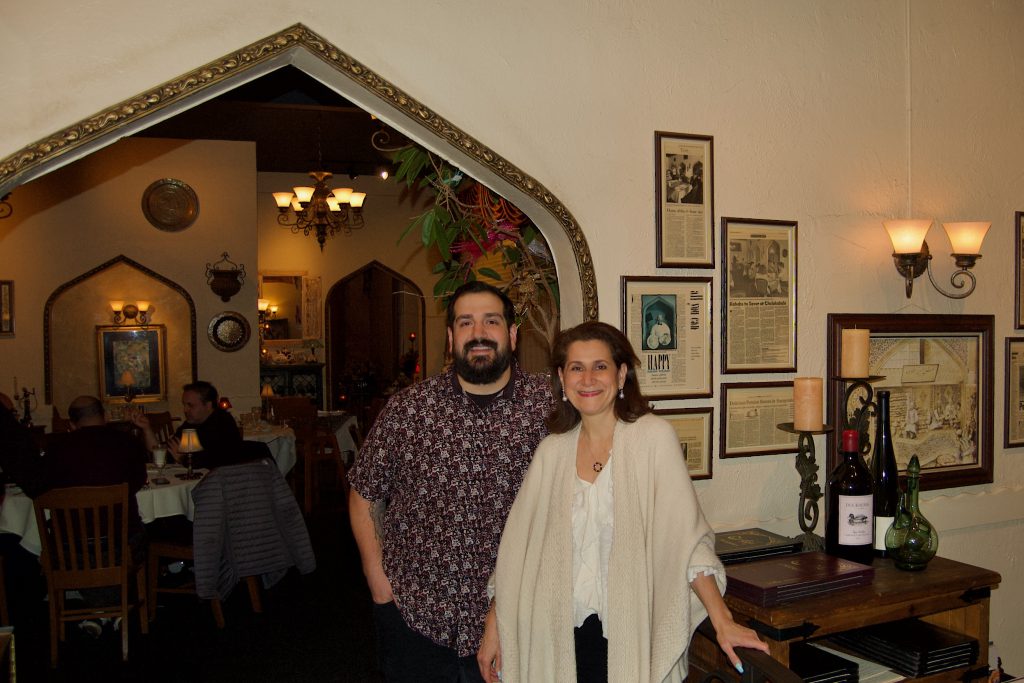
This exchange resulted in an epiphany which led them to the realization that they should begin serving Persian food. And the rest was history.
Mohammad passed away about 30 years ago, and Ashraf passed away just two years ago.
“I wish I could say that they came to the U.S. with a vision of sharing the love and joy of Persian food,” he said. “But in reality, it was a means of survival.”
It’s a tale that’s far too common for not only Persian Americans, but immigrants from around the world who fled their homeland and were forced to find a way to make it in the United States.
In relation to the current state of Iran today, Rahbar says that he sees the light at the end of the tunnel.
“If I have an opportunity to speak to the Iranian crowd,” he said, “I would just say, ‘Let’s continue to support each other.’”
His cousin, Melody Rahbar Jackson, said it’s painful to see what the people of Iran are going through right now.
“They are truly the bravest people,” she said. “I cannot imagine the pain people are going through fighting to live a peaceful life. To the Iranians in America who have friends or family in Iran, I pray for their peace of mind during this scary time, when communicating with loved ones is unknown. Innocent people are suffering, and that deserves compassion and humanity.”
*Updated to correct part of a quote, a misspelling of one dish and the spelling of “Mohammad” in one instance.
*Updated Jan. 17 at 10:45am to add the quote from Melody Rahbar Jackson.







I truly love living in Los Gatos. It’s a special place where cultures come together, support each other, and create something beautiful in a small community.
As a proud Persian, it makes me especially happy to see fellow entrepreneurs thriving – like the new boutique, Melodie.luxe Looks. It’s unique, elegant, and full of personality, just like the spirit of this town.
What I admire most about Los Gatos is how much we support women, owned and small businesses. That’s what keeps this community authentic and full of heart.
I hope we continue to protect that – keeping Los Gatos unique, like Aspen, and not losing its charm to big corporations or high-rise developments!
Let’s keep supporting local, supporting each other, and preserving what makes this town so special.